
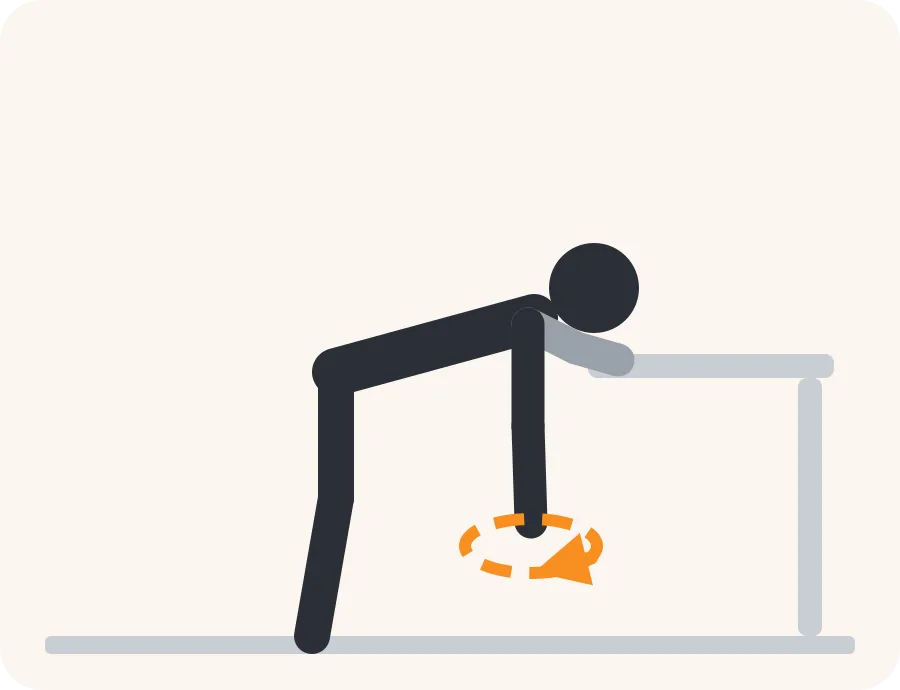
The pendulum is a simple home exercise for your shoulder. Lean on a table with your good arm. Let the sore arm hang down. Gently swing the hanging arm in small circles. Let gravity do the work. About 30 seconds. Do 10 circles each way.
Do this exercise only if your physician checked it on your home exercise handout. Unless your provider writes something different, do your checked exercises two times a day, every day.
How do you do the pendulum?
- Start: Lean on a table with your good arm. Let the sore arm hang down.
- Do: Gently swing the hanging arm in small circles. Let gravity do the work.
- Repeat: About 30 seconds. Do 10 circles each way.
What does the pendulum help?
It moves a painful shoulder without using its muscles. That keeps the joint from stiffening while it heals.
What mistakes should you avoid?
- Using your shoulder muscles to swing the arm. Rock your body instead.
- Making big circles. Small is enough.
- Standing straight up instead of leaning.
When should you stop and call?
A gentle stretch, mild discomfort or feeling a little sore the next morning is normal. Stop and call (314) 887-5866 if you have:
- Sharp or stabbing pain
- Pain 2 points higher than before that lasts more than an hour
- New numbness, tingling or weakness
- Dizziness, or any change in vision
For chest pain, trouble breathing or fainting, call 911.
Bring your log to every visit
Check a box each time you do your exercises and write your pain number once a day. At each visit, your technician counts the days you did them and watches you do one exercise to make sure your form is right.
More shoulder exercises
This exercise is part of our physician-directed physiotherapy program, where a physician orders and supervises every treatment.
Medically reviewed by Dr. Gurpreet Singh Padda, MD, MBA, MHP. Board Certified in Anesthesiology, Pain Medicine, Interventional Pain Management, Addiction Medicine, and Obesity Medicine. Last reviewed October 18, 2026.