
Physiotherapy at Injury Experts is a program of treatments, like heat, traction, laser and gentle electrical stimulation, that a physician orders and supervises. It helps injured muscles, joints and nerves calm down and start working again after a car crash or work injury in St. Louis.
After a crash, a lot of people get handed “therapy” with no plan, no way to measure if it worked, and a stack of paperwork nobody can explain. We built this program to fix all three. A physician decides what you get. Every visit is written down the same way. And we measure your progress with the same questionnaire at the start and at each re-check, so everyone can see the change: you, your other doctors, your lawyer and the insurance company. (Here is how an adjuster scores a claim.)
What is the Physician-Directed Physiotherapy Program?
Its full name is the Physician-Directed Physiotherapy Program: Neuromuscular Modality Re-Education Protocol. That is a mouthful, so here is what each part means:
- Physician-directed means a medical doctor examines you, orders every treatment and supervises your care.
- Physiotherapy means treatments that use heat, cold, movement, light, sound waves and gentle electrical signals to help the body heal.
- Neuromuscular re-education means retraining the nerves and muscles that stopped working together after the injury.
- Modality is the word for each treatment machine or method.
- Protocol means it follows the same written plan every time, so nothing is left to guesswork.
Who runs it?
Our Physician Medical Director, Dr. Gurpreet Singh Padda, MD, MBA, MHP, oversees the program. A physician examines you, writes your orders and re-checks you. Trained technicians run the treatment stations exactly as ordered. Each technician is checked off on every machine before working it alone.
Our technicians are not physical therapists, and they never call themselves that. They do not diagnose you, change your settings or add treatments. Only your physician does.
What happens from start to finish?
-
Step 1: Sign in and paperwork
You fill out the new patient forms once. We enter your details one time so nothing gets copied wrong.
-
Step 2: Exam by a physician
A physician examines you and writes the orders: which treatments, at what settings, and any tests or equipment. The orders are signed in your medical record.
-
Step 3: Your first treatment visit
You fill out a short questionnaire about your daily life. You learn your home exercises. If braces or a home TENS unit were ordered, we fit them and show you how to use them.
-
Step 4: Every visit
Before anything starts, we check that a physician is in the clinic and ask our safety questions out loud. Then you move through the treatments your physician ordered. Most visits take about 90 minutes.
-
Step 5: Tests, if ordered
Some patients need nerve tests or other measurements. We schedule them and track each one until it is done.
-
Step 6: Re-checks
At set points, you fill out the same questionnaire again and your physician re-checks you. Then you either finish with a home plan or keep going with a changed plan.
How many visits you need depends on your injury and how fast you improve. Some people need only one or two visits. Others with more serious injuries need many more, sometimes 60 or more over several months. Your physician sets the plan and changes it as you heal.
What treatments are in the program?
Your physician picks which of these you get and how strong each one is. You can ask to stop any treatment at any time. Tap any treatment to learn what it feels like, who should not have it, and what to remember.
Heat or cold
Cold calms a fresh injury. Heat loosens stiff muscles so the next steps work better. Your physician picks which one. About 10 minutes.
Learn more →
Vibration platform
You stand on a gently shaking platform and hold the rails. It wakes up the small muscles that keep your spine and joints steady after a crash. About 10 minutes. One-on-one: your technician stays with you the whole time
Learn more →
Traction chair
A reclining chair gently stretches your spine and relaxes tight muscles. You can stop it at any time. About 15 minutes.
Learn more →
Neck decompression
You lie on your back with your head in a soft cradle. The table gently pulls and relaxes your neck in cycles to take pressure off discs and nerves. About 15 to 20 minutes.
Learn more →
Laser therapy
A handheld laser shines light on the sore area to calm pain and swelling. You and the technician both wear safety goggles. About 10 minutes. One-on-one: your technician stays with you the whole time
Learn more →
Shockwave therapy
A handheld tool sends sound-wave pulses into a sore tendon or tight muscle to calm pain and restart healing. It is given no more than once a week, only if ordered.
Learn more →
TENS (gentle electrical stimulation)
Sticky pads on your skin send a mild tingle that turns down pain. It is the calm-down step at the end. About 15 minutes.
Learn more →
On a visit with every treatment, the stations run in this order: warm up, stretch, targeted treatment, then calm down.
How do we know it is working?
Pain numbers go up and down from day to day. So we also measure what matters more: what you can do. At your first visit and at each re-check, you fill out a short, well-known questionnaire for each hurt area. You fill it out alone, so the answers are yours.
Neck
Neck Disability Index. It asks how the injury affects everyday things like sleep, work and getting dressed. More on whiplash and neck injuries.
Low back
Oswestry Disability Index. It asks how the injury affects everyday things like sleep, work and getting dressed. More on back injuries.
Knee or leg
Lower Extremity Functional Scale. It asks how the injury affects everyday things like sleep, work and getting dressed. More on knee injuries.
Shoulder, arm or wrist
QuickDASH. It asks how the injury affects everyday things like sleep, work and getting dressed. More on shoulder injuries.
Each questionnaire has a known number of points that counts as a real change. If your score has not improved by that much, your physician changes the plan and writes down why. That keeps you from spending weeks on something that is not helping. Measured progress is also the best answer to anyone who doubts your pain.
What do you do at home?
Machines help, but the work you do at home matters most. At your first visit you learn four simple exercises for your hurt area, two times a day. Bring your exercise log to every visit. Your technician counts the days you did them and watches you do one, to make sure your form is right.
Each exercise has its own page with a drawing, the steps, common mistakes and when to stop:
Neck exercises
Low back exercises
Knee exercises
If your physician orders equipment, we fit it to you, show you how to use it, and give you written instructions. We record each item once, when you sign for it.
Why do we talk about food at every visit?
Diet and metabolic health coaching
Pain is not only about the injured spot. High blood sugar, extra belly fat and constant snacking keep the whole body inflamed, and inflamed tissue heals slower and hurts more. Stress and poor sleep make it worse. So at every visit, we spend time on what you eat and how it affects your healing. Small changes here can make every other treatment work better. You get our written eating protocol at your first visit: walk 10 minutes after you eat, stop vegetable oils and sugar, sleep at least 7 hours, and eat inside a time window.
See the full eating protocol, step by step →
Read more: why pain sometimes will not heal.
What tests might your physician order?
Some injuries need more than an exam. If your physician orders a test, we schedule it and check at every visit until it is done.
We also offer the  assessments, which look at how your heart, blood vessels, nerves, balance and metabolism are working:
CMATA set of quick, painless checks of your blood flow, small nerves, heart rhythm and body composition.Learn more →

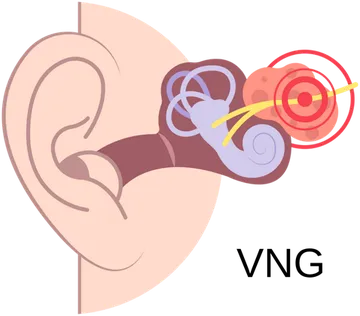 VNGAn eye-movement test that checks the inner ear and balance system, often used after dizziness from a crash.Learn more →
What happens at each re-check?
You fill out the questionnaire again, and your physician re-checks you. Then there are two paths:
- You are done. You leave with your final scores and a home plan.
- You need more time. Your physician writes down why care should continue and what will change, and sets the next re-check. Repeating the same plan is never a reason to keep going.
If an injury stops improving, your physician may talk with you about other options, such as orthobiologics and PRP injections or diagnostic nerve blocks, before anyone mentions surgery.
What does the record show?
This part is for your attorney, the other side, and the insurance company. Every visit is written down the same way, at the time it happens, so anyone can check it:
- A signed record for each visit: arrival and departure times, each treatment given, the settings used, and how you did.
- For one-on-one treatments, the clock times the technician started and stopped.
- Your signature on each visit record, confirming the treatments you received.
- The same questionnaire scores at the start and at each re-check, so progress is measured, not guessed.
- Physician orders, re-checks and test reports, signed in the electronic medical record.
- A signed receipt for any equipment you were given.
We built it this way on purpose. A record that is complete and checkable helps whoever is telling the truth. For more on how records are read: writing the note for the defense expert, the insurance medical exam, expert testimony after Daubert and pre-existing conditions.
Frequently asked questions
Is physiotherapy the same as physical therapy?
Not here. Physical therapy is given by a licensed physical therapist. Our physiotherapy program is ordered and supervised by a physician and run by trained technicians. Learn more: how our injury care fits together.
Do I need a referral?
No. Call (314) 887-5866 or schedule online. Bring any scans you have and your claim number if there is one. Learn more: why getting care early matters.
How long is each visit?
About 90 minutes, or about 100 minutes on a day with shockwave. The last visit of the day starts at 3:00 PM. Learn more: what a collision actually does to you.
Does any of it hurt?
Most people feel warmth, a stretch or a tingle. Shockwave can feel uncomfortable for a few seconds. Tell your technician right away if anything hurts, and the machine stops. Learn more: why a soft tissue injury can hurt so much.
What if I miss a visit?
Call or text us at least 24 hours ahead. We move the visit to another day in the same week when we can, so your progress stays on track. Gaps in care are one of the first things an insurer looks for. Learn more: how adjusters score a claim.
Where is Injury Experts located?
We are at 4477 Woodson Rd, Suite 202, St. Louis, MO 63134, next to Lambert International Airport. Call (314) 887-5866 or text (314) 886-5902. We are open Monday to Friday, 8:00 AM to 5:00 PM. We also care for patients from the Metro East: see injury care for Illinois patients.
Sources
- Vernon H, Mior S. The Neck Disability Index: a study of reliability and validity. J Manipulative Physiol Ther. 1991;14(7):409-415. PubMed 1834753
- Fairbank JC, Pynsent PB. The Oswestry Disability Index. Spine. 2000;25(22):2940-2952. PubMed 11074683 (doi:10.1097/00007632-200011150-00017)
- Binkley JM, Stratford PW, Lott SA, Riddle DL. The Lower Extremity Functional Scale (LEFS): scale development, measurement properties, and clinical application. Phys Ther. 1999;79(4):371-383. PubMed 10201543
- Beaton DE, Wright JG, Katz JN, et al. Development of the QuickDASH: comparison of three item-reduction approaches. J Bone Joint Surg Am. 2005;87(5):1038-1046. PubMed 15866967 (doi:10.2106/JBJS.D.02060)
Medically reviewed by Dr. Gurpreet Singh Padda, MD, MBA, MHP. Board Certified in Anesthesiology, Pain Medicine, Interventional Pain Management, Addiction Medicine, and Obesity Medicine. Last reviewed October 18, 2026.