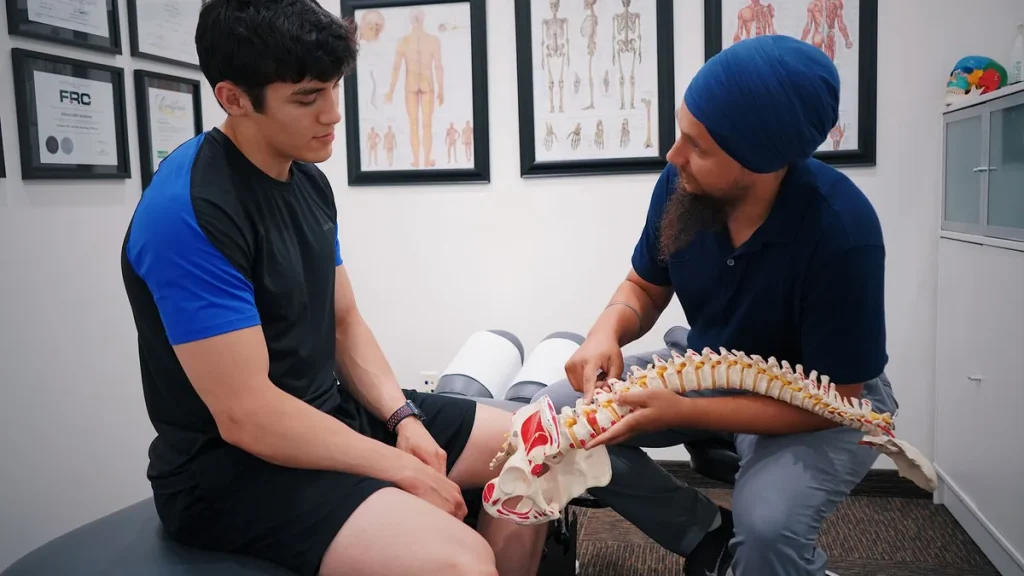
By the time most people arrive with a chronic injury, the choice has narrowed to two extremes: keep doing the conservative management that has already failed, or accept major surgery that feels like a leap into the dark.
Presented that way, it is a poor choice. It is also an incomplete one, because it skips the entire middle of the field — targeted, image-guided interventional procedures that are neither passive nor destructive.
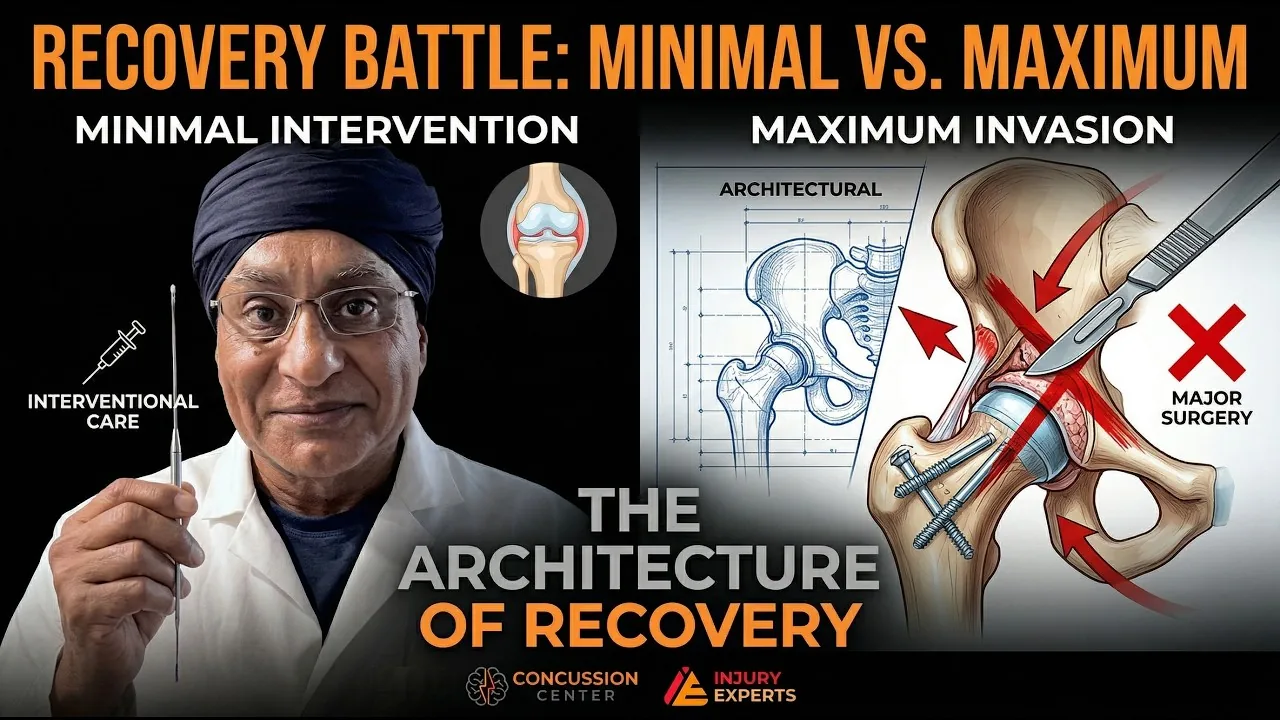
Watch on YouTube: The Architecture of Recovery: Minimal Intervention vs Maximum Invasion
Why “find the abnormality and remove it” fails so often
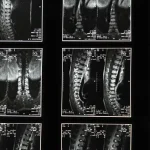
The reductionist logic is seductive: locate a structural abnormality on the MRI, cut it out, problem solved. It fails frequently enough to have earned its own diagnosis — failed back surgery syndrome, in which the structural target is successfully corrected and the patient remains in pain.
Part of the reason is that the abnormality on the film is not always the thing generating the pain; asymptomatic findings are common. The other part is biochemical. Major surgery is a substantial metabolic stressor. Performed on someone already carrying high systemic inflammation — elevated TNF-α, IL-6, IL-1β — it asks tissue that is struggling to maintain itself to also perform a large repair. Why the terrain governs the outcome
The diagnostic block as an audit, not a painkiller
The single most underused tool in this field is the diagnostic nerve block, and its value is not the relief it provides.
By temporarily silencing a specific nerve or joint, a block tests a hypothesis: is this the structure carrying the signal? If the pain reliably disappears and returns as the anesthetic wears off, the circuit has been identified. If it does not, an expensive and irreversible assumption has just been disproved cheaply.
This is why it belongs before any permanent intervention. Confirm the signal, then commit.
Two workhorse procedures
Epidural steroid injection (ESI). With a herniated disc, pain is rarely pure mechanical pressure. Disc material provokes a chemical inflammatory cascade around the nerve root, and much of the pain is that chemistry rather than the compression itself. An ESI is best understood as a targeted anti-inflammatory intervention aimed at that cascade. Recovery from the procedure is measured in hours.
Honest framing: epidural steroid injections generally produce meaningful short- to medium-term relief in radicular pain, with benefit that often diminishes over months. They are a means of creating a window in which rehabilitation can happen — not a permanent cure.
Radiofrequency ablation (RFA). For facet-mediated joint pain, RFA uses thermal energy to interrupt the small medial branch nerves carrying the pain signal. The relevant contrast with fusion is structural: RFA stops the signal without removing or immobilizing the joint. Mobility is preserved, which matters because movement is one of the few durable levers on metabolic health. Nerves regenerate, so the effect is durable rather than permanent, and the procedure can be repeated.
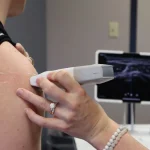
Both are used with fluoroscopic or high-resolution ultrasound guidance for precise placement, and can be performed without routine sedation — which has a practical advantage, since an awake patient can report sensory and motor responses in real time.
Complex regional pain syndrome
CRPS deserves separate mention because it is so often mishandled. Diagnosis should follow the Budapest criteria, the accepted standard.
The essential point is that in established CRPS the problem has become centralized — the nervous system has lost normal self-regulation. This is why amputation of an affected limb rarely resolves CRPS: removing the periphery does not address a centrally maintained pain state. Treatment has to target the nervous system, not only the painful part.
The opioid trap
Long-term opioid therapy can produce opioid-induced hyperalgesia, in which the pain system becomes more sensitive over time, while the body’s endogenous relief mechanisms are downregulated. The result is a patient on escalating doses experiencing worsening pain — a well-described phenomenon, and one of the strongest arguments for targeted intervention over indefinite medication.
Never adjust or stop opioid medication on your own; withdrawal carries real risks and requires physician supervision.
What decides whether any of this works
A procedure is only as good as the body it is performed on. Where insulin resistance and systemic inflammation are present, a well-placed injection is still working against the environment it sits in. Measuring the biological terrain — markers such as hs-CRP, TNF-α, and lipid particle measures — is therefore not an adjunct to the procedure; it is what determines whether the procedure holds.
A note on what this article does not cover. The source video describes a peptide-based protocol and specific regulatory classifications. Those claims are deliberately excluded here. Most substances in that category are not FDA-approved for these uses, their regulatory and compounding status is contested and changes, and efficacy for injury recovery is not established to the standard this site holds. Anything of that kind belongs in an individual conversation with your physician, with an honest account of the evidence.
Where a biologic injection fits alongside these procedures is now a written question rather than an open one — the societies graded it between 2024 and 2026. What those guidelines say, and where the evidence runs against them.
Frequently asked questions
What are the alternatives to back surgery?
Image-guided interventional options include diagnostic nerve blocks to identify the pain generator, epidural steroid injections for inflammatory radicular pain, and radiofrequency ablation for facet-mediated pain — alongside rehabilitation and management of the underlying metabolic drivers.
What is failed back surgery syndrome?
Persistent or recurrent pain after technically successful spinal surgery. It occurs partly because the structural finding was not the true pain generator, and partly because the biological environment did not support healing.
How long does radiofrequency ablation last?
Relief is typically durable for months rather than permanent, because the treated nerves regenerate over time. The procedure can generally be repeated. Individual results vary.
Is an epidural steroid injection a cure?
No. It is best understood as targeted anti-inflammatory treatment that reduces radicular pain for a period, creating an opportunity for rehabilitation. Benefit commonly diminishes over months.
Why would a procedure be done without sedation?
Staying awake allows real-time sensory and motor feedback during needle placement, which supports accuracy. Sedation is used when clinically appropriate; this is a discussion to have with your physician.
Where is Injury Experts located?
Injury Experts is at 4477 Woodson Rd, Suite 202, St. Louis, MO 63134, next to Lambert International Airport, serving the St. Louis region in Missouri and Illinois. Call (314) 887-5866 or text (314) 886-5902.
Get your injury validated by science, not by an adjuster's spreadsheet
We turn subjective pain into objective, court-ready evidence — biomarkers, biomechanics and diagnostic blocks. Bring us your case before the insurer defines it for you.
Or call (314) 887-5866 · text (314) 886-5902
Key takeaways
- Between failed conservative care and major surgery sits targeted interventional treatment.
- A diagnostic block confirms the pain generator before anything irreversible.
- RFA interrupts the signal while preserving joint structure and mobility.
- CRPS is centrally maintained — the Budapest criteria guide diagnosis, and amputation does not resolve it.
- Opioid-induced hyperalgesia can make long-term opioid therapy counterproductive.
Medically reviewed by Gurpreet Singh Padda, MD, MBA, MHP — Board Certified in Anesthesiology, Pain Medicine, Interventional Pain Management, Addiction Medicine, and Obesity Medicine.
This article is for general education and is not medical advice. It does not create a physician–patient relationship. Do not start, stop, or change any medication — including opioid medication — without consulting your physician.