Metabolic terrain comes before an orthobiologic because the injection is made from the patient. The repair response depends on the setting it lands in. Metabolic inflammation keeps tissue in a breakdown mode. Insulin resistance changes how tissue handles fuel. Short sleep and chronic stress raise inflammatory markers.
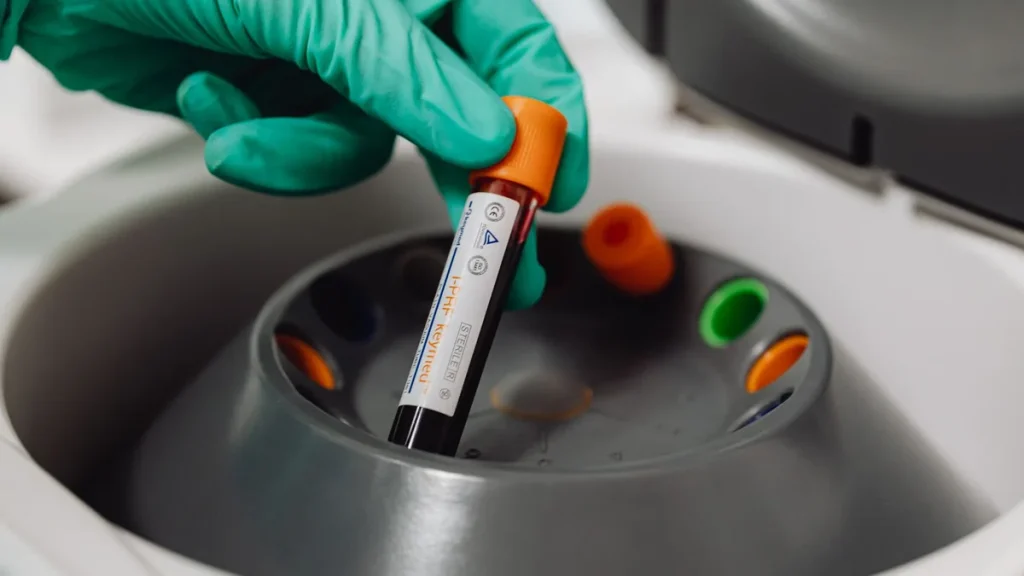
Autologous is a quiet word doing huge work. It means the shot is made from the patient: their blood, their marrow, their platelets, their growth factors. There is no supplier, no batch number, no quality control team. The raw material is whatever body walked into the room.
That raises the obvious question nobody asks before the visit. What shape is the raw material in?
The confession that belongs at the front of this
Dr. Gurpreet Singh Padda, MD, MBA, MHP spent the first two decades of his career telling patients with a creeping A1C that it was not too bad. That is what he had been taught to say. He was wrong, and he says so in public. The reason is that what he learned later about the body changed how he treats pain, not just how he talks about diet. Nobody gets to be the authority on metabolic disease without first admitting they misread it for twenty years.
What the tissue is actually being asked to do
A platelet concentrate drops a load of growth factors into one spot. It asks the local tissue to start a repair. Whether that repair happens depends on the setting it lands in, both in that spot and across the whole body.
Two upstream drivers matter most here. The first is metabolic inflammation. That is a chronic, low-grade inflammatory state that keeps the body in breakdown mode instead of repair mode. The second is insulin resistance and the hyperinsulinemia (too much insulin in the blood) that comes with it. It changes how tissue handles fuel. It also changes how the smallest arteries that feed tendon and cartilage behave.
Then comes the third factor, which is not biological at all. It is the shift schedule, the second job, the four hours of sleep, and the food on the way home at eleven at night. After an injury, it is also the money pressure of a claim that will not settle. Those are not soft factors. Short sleep and chronic stress are among the surest ways to raise inflammatory markers in a human being. And a clinic never asks about them. The longer version of that argument.
What the evidence supports, and what it does not
Say this carefully, because this is where excitement outruns the data.
Metabolic disease is firmly associated with the tendon problems people get shots for. A meta-analysis of risk factors for rotator cuff tendinopathy found diabetes associated with about double the odds, an odds ratio of 2.24. Age over 50 had an odds ratio of 3.31. That is about who gets the condition, not who responds to treatment for it. The difference matters.
On response, the honest finding runs partly against gut feeling. A secondary analysis of a randomized trial compared PRP with microfragmented adipose tissue (processed fat tissue) in knee osteoarthritis. It found body mass index inversely correlated with quality-of-life and daily-activity outcomes in the adipose group (higher BMI, worse results), and not in the PRP group. Forty-nine patients completed twelve months. It is one trial. Body mass index is a rough stand-in for metabolic health, not a measure of it. But no one should tell you that trial data prove a metabolic workup improves your PRP result. That trial does not exist yet.
The guidelines do say the response depends on who is picked for treatment and on how well the shot is prepared. They also say the field’s own reporting is too uneven to single out factors like this. That is an argument for measuring more, not less.
So why measure it at all
There are three reasons that do not depend on a trial that has not been run.
First, the terrain is a separate disease, and it does not politely wait outside. Someone with untreated insulin resistance who gets an excellent knee injection still has untreated insulin resistance. It will shape the next twenty years in ways the knee will not.
Second, it is the most common reason a patient does everything right and stays in pain. When the right structural treatment has been given accurately and the pain stays, the body’s setting is the factor left to question.
Third, it is objective. An injured person spends months being told their pain is subjective. High-sensitivity CRP, markers of insulin resistance, lipid particle measures and A1C are numbers on a page with dates. Dated numbers act differently in a claim file than adjectives do. Why objective data is the answer to that accusation.
What gets measured
A metabolic and inflammatory panel is the starting point: high-sensitivity CRP, markers of insulin resistance, lipid particle measures and A1C. These are read next to sleep, nicotine use, the medication list and the clinical exam. No single value decides anything. The pattern does.
What gets asked of the patient, and why it works
Every step here has a reason in the body, or we do not ask for it.
Load the tissue. Tendon and cartilage adapt to the load you put on them. Tissue that is not loaded does not rebuild well. Immobilization (keeping a joint still) after an injury is one of the most common self-made causes of a bad outcome. Gradual loading is the stimulus the injection is supposed to make bearable.
Sleep, seriously. Too little restful sleep is associated with higher cortisol and higher inflammatory markers. High cortisol favors breakdown over repair. This is the most often ignored factor after an injury. That is mostly because pain wrecks sleep and nobody treats the sleep.
Nicotine. It squeezes the small vessels that feed the tissue you are trying to heal. If you make only one change this month, make that one.
Change what the background inflammation is fed. Acellular carbohydrates and industrial seed oils are not a moral question. They feed the inflammatory state the injection has to work inside.
None of this is aftercare. About half of the treatment plan in this practice is behavior. It is the half that decides whether the procedure half holds.
What this has to do with the claim
Two things, one helpful and one not.
The unhelpful one first. A documented metabolic condition is exactly the other explanation a defense expert reaches for. If your knee hurts and your A1C is 6.9, someone will argue the arthritis was metabolic and the crash was beside the point.
Now the helpful one. The counter-argument only exists if the terrain was measured and addressed. Picture a record that tracks inflammatory and metabolic markers over time, with a treatment plan aimed at them. It turns the defense’s other explanation into a documented comorbidity (a second condition) that was found and managed. That is a different conversation entirely. How causation gets argued when a pre-existing condition is in the file.
Related reading: arthritis after an injury and repetitive strain injury.
All orthobiologic care: Our orthobiologics and PRP injections page lists every injury we treat with PRP, bone marrow concentrate and microfragmented fat.
Frequently asked questions
Does having diabetes mean an orthobiologic injection will not work?
No. The evidence shows that metabolic disease is associated with getting tendon problems in the first place. A meta-analysis found diabetes roughly doubled the odds of rotator cuff tendinopathy. It does not show that it predicts treatment failure. It is a reason to treat both, not a reason to hold back either. Learn more: why the biological terrain governs recovery.
Is there proof that fixing my metabolic markers improves PRP results?
Not from a trial built to answer that question. One randomized-trial analysis found body mass index correlated with outcomes after microfragmented adipose tissue but not after PRP. We do metabolic care because the metabolic disease is real and treatable on its own. It is also the most common reason pain lasts after accurate structural treatment. Learn more: what the guidelines do and do not establish.
What tests are involved?
A metabolic and inflammatory panel is the starting point: high-sensitivity CRP, markers of insulin resistance, lipid particle measures and A1C. These are read next to sleep, nicotine use, medications and the clinical exam. No single value decides it. Learn more: how the panel is read.
Is this saying my injury pain is my own fault?
No. Metabolic inflammation is a body state that shows up in people of every build. Sleep, shift work, stress and the food around you drive it as much as anything a person chooses. It changes how tissue heals. It says nothing about blame. Learn more: the consequences of injury that never make it into the record.
Could the insurance company use my metabolic condition against me?
They can try. The answer is documentation, not hiding it. A record that names the condition, tracks its markers over time and treats it turns the other explanation into a managed comorbidity. Learn more: how causation is argued when a pre-existing condition is in the file.
Where is Injury Experts located?
Injury Experts is at 4477 Woodson Rd, Suite 202, St. Louis, MO 63134, next to Lambert International Airport, serving the St. Louis region in Missouri and Illinois. Call (314) 887-5866 or text (314) 886-5902.
Get your injury validated by science, not by an adjuster's spreadsheet
We turn subjective pain into objective, court-ready evidence — biomarkers, biomechanics and diagnostic blocks. Bring us your case before the insurer defines it for you.
Or call or text us.
Sources
- Leong HT, Fu SC, He X, et al. Risk factors for rotator cuff tendinopathy: a systematic review and meta-analysis. J Rehabil Med. 2019;51(9):627–637. doi:10.2340/16501977-2598 (PMID 31489438)
- Baria M, George R, Barker T, et al. Relationship of body mass index on patient-reported outcomes after platelet-rich plasma versus microfragmented adipose tissue for knee osteoarthritis: a secondary analysis of a randomized controlled trial. Am J Phys Med Rehabil. 2024;103(11):1006–1011. doi:10.1097/PHM.0000000000002499 (PMID 38630921)
- D'Souza RS, Her YF, Hussain N, et al. Evidence-based clinical practice guidelines on regenerative medicine treatment for chronic pain: a consensus report from a multispecialty working group. J Pain Res. 2024. doi:10.2147/JPR.S480559 (PMID 39282657)
- Manchikanti L, Navani R, Navani A, et al. Comprehensive evidence-based guidelines for regenerative therapies in the management of chronic low back pain: 2025 update from the American Society of Interventional Pain Physicians (ASIPP). Pain Physician. 2025;28(S7):S1–S119. (PMID 41481869)
- Laver L, Filardo G, Sanchez M, et al. The use of injectable orthobiologics for knee osteoarthritis: a European ESSKA-ORBIT consensus. Part 1 — blood-derived products (platelet-rich plasma). Knee Surg Sports Traumatol Arthrosc. 2024. doi:10.1002/ksa.12077 (PMID 38436492)
- Bensa A, Sangiorgio A, Deabate L, et al. PRP injections for the treatment of knee osteoarthritis: the improvement is clinically significant and influenced by platelet concentration — a meta-analysis of randomized controlled trials. Am J Sports Med. 2025. doi:10.1177/03635465241246524 (PMID 39751394)
This article is for general education and is not medical advice. It does not create a physician–patient relationship. Do not start, stop, or change any medication — including opioid medication — without consulting your physician.
Medically reviewed by Dr. Gurpreet Singh Padda, MD, MBA, MHP — Board Certified in Anesthesiology, Pain Medicine, Interventional Pain Management, Addiction Medicine, and Obesity Medicine.