Under the 2024 ESSKA-ICRS consensus, PRP is appropriate for a knee injured in a crash under three conditions. The arthritis is Kellgren-Lawrence grade 0 to 3. The patient is 80 or under. And conservative or injective treatment has already failed. Grade 4 was rated uncertain, not inappropriate.
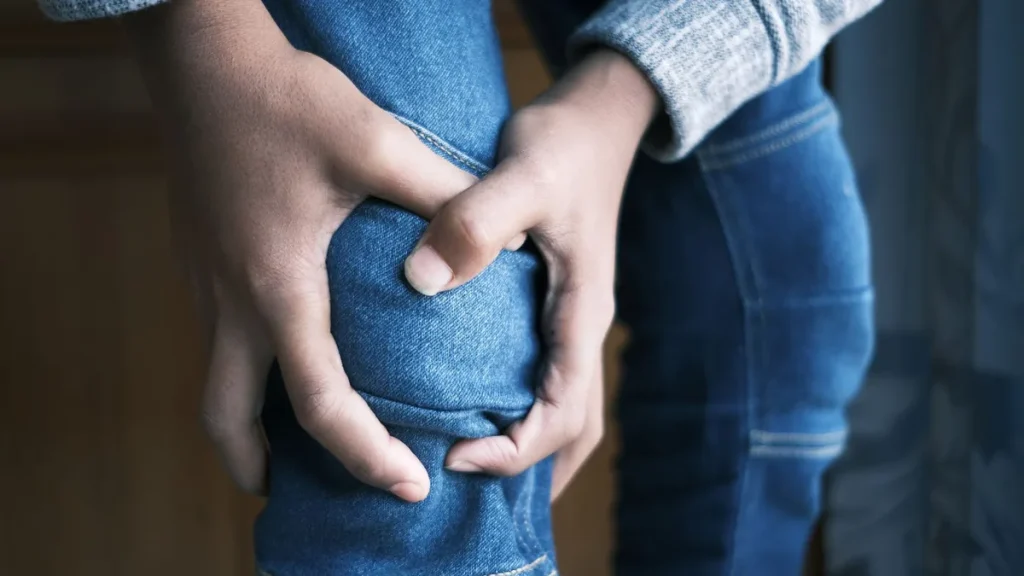
The knee hits the dashboard. Six weeks later the MRI report comes back. Somewhere in it are the words degenerative changes, and an adjuster with a highlighter has all they need.
The argument writes itself. This knee was already arthritic, the crash just revealed it, and the claim is worth a fraction of what was asked. It is a good argument against a patient who does not know how joints really fail.
The injury does not reveal the arthritis. It starts it.
Post-traumatic osteoarthritis is its own diagnosis, and it is common. Roughly half of people who tear an anterior cruciate ligament (ACL) develop osteoarthritis in that knee. Reconstruction does not reliably prevent it. Reviews of the literature have not found convincing evidence that surgical reconstruction lowers the rate compared with conservative care.
Read that in the direction time actually runs. A joint injured today carries a meaningfully higher risk of arthritis for decades. That makes a knee injury a question about the next thirty years, not the next appointment. The defense wants to talk about what your cartilage looked like last month. The medicine talks about what it will look like in 2046. How exacerbation of a pre-existing condition is actually proven, and why the eggshell doctrine exists at all.
Where PRP sits on the grading scale
Knees are graded Kellgren-Lawrence 0 through 4, from no visible change to bone-on-bone. The 2024 ESSKA-ICRS consensus rated 216 scenarios. Each crossed that grade with age, compartment, effusion (fluid in the joint) and what had already been tried. Its conclusion: intra-articular PRP is appropriate in patients aged 80 or under with grade 0 to 3 arthritis, after conservative or injective treatment has failed. Not as a first move.
The companion ESSKA-ORBIT consensus put three statements at grade A, its highest tier. First, the preclinical and clinical evidence supports PRP use in knee osteoarthritis. Second, it is shown to work in mild to moderate disease at grade 3 or below. Third, PRP gives a longer-lasting effect than corticosteroid, with a safer profile. The 2026 AAPM&R guidance statement added five evidence-based recommendations and eleven best practices. They cover how to select patients and how to give it responsibly.
What the head-to-head trials found
Against hyaluronic acid, a meta-analysis of 18 level-1 studies — 811 patients on PRP, 797 on hyaluronic acid — found mean WOMAC improvement of 44.7% against 12.6%. In the same analysis, leukocyte-poor preparations (low in white blood cells) gave better subjective (self-reported) knee scores than leukocyte-rich ones. That is a finding about how the product is made, not about what it is called.
Against corticosteroid, a 2024 network meta-analysis found PRP, bone marrow concentrate and hyaluronic acid all beat steroid on pain and function at a minimum of six months. And a 2025 meta-analysis of randomized trials found the improvement clinically significant. The size of the effect was influenced by the platelet concentration actually delivered.
That last point is not a footnote. It is why two clinics injecting “PRP” can get two different results, and both can be telling the truth about what they used. What has to be recorded for the injection to be describable.
Grade 4, where the consensus stops and the decision becomes yours
The ESSKA-ICRS panel did not extend its appropriateness rating to grade 4 knees. Read the numbers under the headline. Across the whole exercise, 4.2% of scenarios were rated inappropriate and 56.9% uncertain. Grade 4 fell overwhelmingly into uncertain, not into inappropriate. Uncertain is a statement about the evidence, not a ban.
The trial evidence at that grade exists, and it is worth stating precisely. One prospective, blinded, placebo-controlled study tested serial PRP in Kellgren-Lawrence grade 4 knees. The patients were unwilling to have joint replacement or had relative contraindications to it (reasons it could be risky for them). PRP reached clinically meaningful improvement in WOMAC and pain scores at three and six months, where saline did not. A four-year follow-up of bone marrow aspirate concentrate in 37 grade 3 and 4 knees reported improvement in 35. No prosthesis was implanted over the follow-up period. These are small studies. They are also the studies that exist for exactly the patient the consensus panel could not rate.
The position here is plain. At bone-on-bone, structure is not coming back. Joint replacement remains the definitive operation for the structure and for the person who wants it. But most grade 4 patients are not choosing between an injection and a replacement. They are choosing between an injection and another year of climbing analgesic (painkiller) doses. Time and a lower medication burden are real clinical goals. They are the goals worth naming out loud at that stage. What escalating medication does to the claim as well as the body.
The meniscus, where the answer is no
A torn meniscus is one of the most common findings after a twisting knee injury. It is where the honest answer runs against the treatment. The 2019 ESSKA meniscus consensus reviewed biological enhancement — needling, PRP — and found no evidence that it improves healing of a repaired meniscus. What that consensus does say, firmly, is that saving tissue beats removing it. Long-term outcomes after partial meniscectomy are worse than after repair. And many tears once called irreparable should be repaired.
So the meniscus talk is about saving tissue, not injecting it. A page that claimed otherwise would be selling you something.
What has to be in the chart for a crash knee
The mechanism, in detail, recorded early. Baseline imaging read against the exam, not in isolation. That is because a radiology report describing degenerative change says nothing about when that change started or whether it hurt last month. Function measured at intervals. And where a biologic is used, the indication mapped explicitly to the guideline scenario it belongs to, with the preparation described.
One more, and it is the one people skip: the metabolic background. Cartilage and synovium (the joint lining) are not inert tissue waiting patiently. They behave differently in a systemically inflamed body. And the injectate is made from that same body. Why the terrain is measured first.
Related reading: a knee injury at work and arthritis after an injury.
All orthobiologic care: Our orthobiologics and PRP injections page lists every injury we treat with PRP, bone marrow concentrate and microfragmented fat.
Frequently asked questions
The insurance company says my knee arthritis is pre-existing. Is that the end of it?
No. Post-traumatic osteoarthritis is a known result of joint injury. Roughly half of people who tear an ACL develop arthritis in that knee, and reconstruction has not been shown to reliably prevent it. The clinical question is what the injury started, not only what an image shows today. Learn more: proving exacerbation of a pre-existing condition.
What grade of knee arthritis is PRP appropriate for?
The 2024 ESSKA-ICRS consensus rated it appropriate in patients aged 80 or under with Kellgren-Lawrence grade 0 to 3 arthritis, after conservative or injective treatment has failed. It did not endorse it as a first-line treatment. Grade 4 was rated uncertain, not inappropriate. Learn more: the full guideline record.
Is PRP better than a cortisone shot for an injured knee?
The ESSKA-ORBIT consensus made it a grade A statement: PRP gives a longer effect than the short-lived effect of corticosteroid, with a safer profile. A 2024 network meta-analysis found PRP, bone marrow concentrate and hyaluronic acid all beat steroid at a minimum of six months. Individual results vary. Learn more: how targeted injections fit between conservative care and surgery.
Will PRP heal my torn meniscus?
The evidence does not support that claim. The 2019 ESSKA meniscus consensus found no evidence that biological enhancement improves healing of a repaired meniscus. It stresses saving meniscal tissue instead of removing it. Learn more: why preserving structure changes long-term outcomes.
Does bone-on-bone arthritis rule out an injection?
No. Structure will not be restored at that stage, and joint replacement remains the definitive operation for the structure. But a placebo-controlled trial in grade 4 knees found clinically meaningful improvement with serial PRP at three and six months, where saline did not. And for many patients, the real alternative is another year of rising medication doses. Learn more: what medication escalation costs, medically and legally.
How soon after a crash should a knee be evaluated?
Early, and in detail. The mechanism, the exam and baseline imaging recorded close to the event are what later separate an injury from an alleged pre-existing condition. Early findings also shape treatment. Learn more: what the first days after an injury predict.
Where is Injury Experts located?
Injury Experts is at 4477 Woodson Rd, Suite 202, St. Louis, MO 63134, next to Lambert International Airport, serving the St. Louis region in Missouri and Illinois. Call (314) 887-5866 or text (314) 886-5902.
Get your injury validated by science, not by an adjuster's spreadsheet
We turn subjective pain into objective, court-ready evidence — biomarkers, biomechanics and diagnostic blocks. Bring us your case before the insurer defines it for you.
Or call or text us.
Sources
- Racine J, Aaron RK. Post-traumatic osteoarthritis after ACL injury. R I Med J. 2014;97(11):25–28. (PMID 25365816)
- Wang LJ, Zeng N, Yan ZP, Li JT, Ni GX. Post-traumatic osteoarthritis following ACL injury. Arthritis Res Ther. 2020;22(1):57. doi:10.1186/s13075-020-02156-5 (PMID 32209130)
- Kon E, Di Matteo B, Delgado D, et al. Platelet-rich plasma injections for the management of knee osteoarthritis: the ESSKA-ICRS consensus. Recommendations using the RAND/UCLA appropriateness method for different clinical scenarios. Knee Surg Sports Traumatol Arthrosc. 2024. doi:10.1002/ksa.12320 (PMID 38961773)
- Laver L, Filardo G, Sanchez M, et al. The use of injectable orthobiologics for knee osteoarthritis: a European ESSKA-ORBIT consensus. Part 1 — blood-derived products (platelet-rich plasma). Knee Surg Sports Traumatol Arthrosc. 2024. doi:10.1002/ksa.12077 (PMID 38436492)
- Borg-Stein J, Sussman WI, Boddapati V, et al. AAPM&R guidance statement on platelet-rich plasma for knee osteoarthritis. PM R. 2026. doi:10.1002/pmrj.70144 (PMID 41989317)
- Belk JW, Kraeutler MJ, Houck DA, et al. Platelet-rich plasma versus hyaluronic acid for knee osteoarthritis: a systematic review and meta-analysis of randomized controlled trials. Am J Sports Med. 2021;49(1):249–260. doi:10.1177/0363546520909397 (PMID 32302218)
- Jawanda H, Khan ZA, Warrier AA, et al. Platelet-rich plasma, bone marrow aspirate concentrate, and hyaluronic acid injections outperform corticosteroids in pain and function scores at a minimum of 6 months as intra-articular injections for knee osteoarthritis: a systematic review and network meta-analysis. Arthroscopy. 2024. doi:10.1016/j.arthro.2024.01.037 (PMID 38331363)
- Bensa A, Sangiorgio A, Deabate L, et al. PRP injections for the treatment of knee osteoarthritis: the improvement is clinically significant and influenced by platelet concentration — a meta-analysis of randomized controlled trials. Am J Sports Med. 2025. doi:10.1177/03635465241246524 (PMID 39751394)
- Saraf A, Hussain A, Sandhu AS, et al. Serial platelet-rich plasma intra-articular injections in Kellgren and Lawrence grade IV knee joint osteoarthritis: a prospective blinded placebo-controlled interventional study. Indian J Orthop. 2022. doi:10.1007/s43465-022-00730-4 (PMID 36187584)
- Pabinger C, Lothaller H, Kobinia GS. Intra-articular injection of bone marrow aspirate concentrate (mesenchymal stem cells) in KL grade III and IV knee osteoarthritis: 4 year results of 37 knees. Sci Rep. 2024. doi:10.1038/s41598-024-51410-2 (PMID 38302491)
- Kopf S, Beaufils P, Hirschmann MT, et al. Management of traumatic meniscus tears: the 2019 ESSKA meniscus consensus. Knee Surg Sports Traumatol Arthrosc. 2020;28(4):1177–1194. doi:10.1007/s00167-020-05847-3 (PMID 32052121)
This article is for general education and is not medical advice. It does not create a physician–patient relationship. Do not start, stop, or change any medication — including opioid medication — without consulting your physician.
Medically reviewed by Dr. Gurpreet Singh Padda, MD, MBA, MHP — Board Certified in Anesthesiology, Pain Medicine, Interventional Pain Management, Addiction Medicine, and Obesity Medicine.