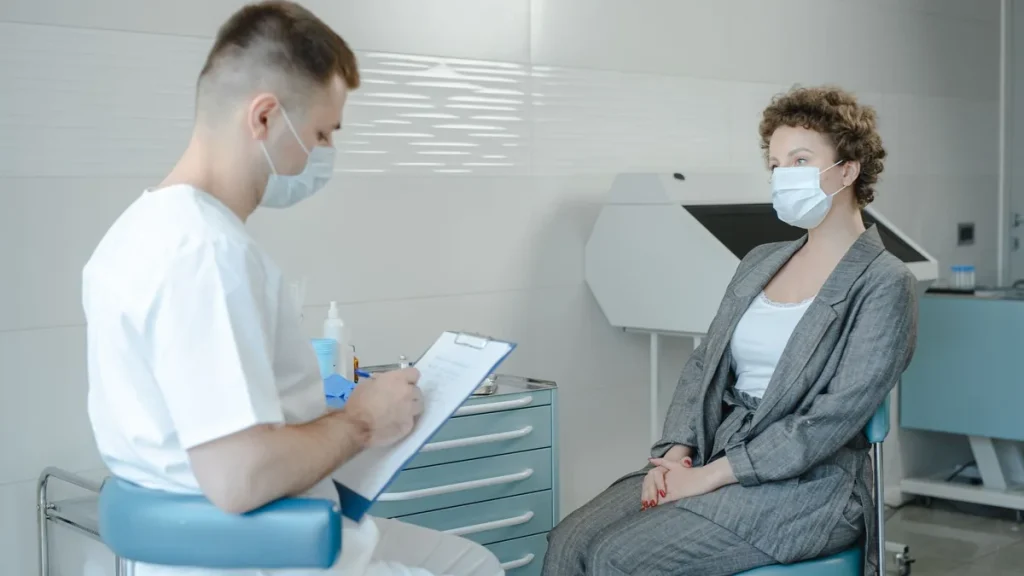
If you have an active injury claim, a letter has probably arrived requesting an independent medical examination. It is worth being precise about what that phrase means, because the word doing the most work in it is the least accurate.
The examination is requested and paid for by the party with a financial interest in the outcome. It is not a second opinion arranged for your benefit. It is a forensic audit of your claim. Understanding that is not cynicism — it is the difference between walking in as a patient and walking in prepared.
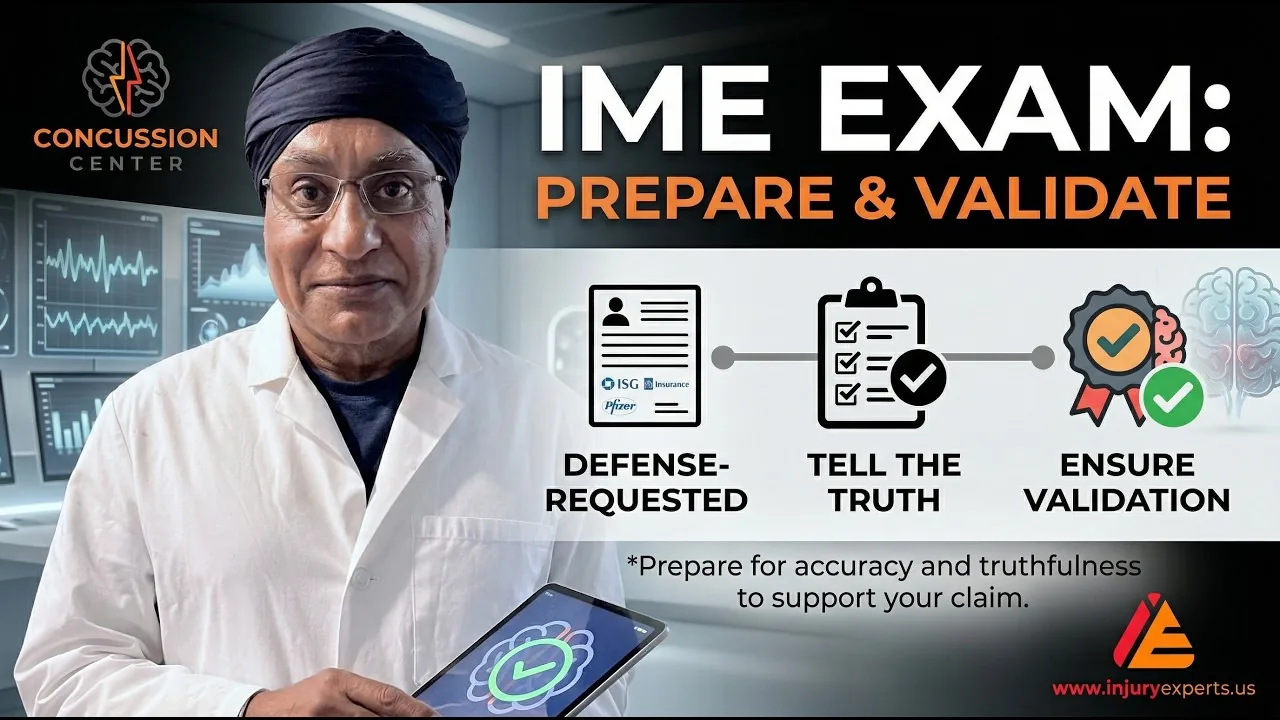
Watch on YouTube: What exactly is an IME
The economics you are standing inside
Claims are not weighed by a person contemplating your suffering. They are substantially scored by software. Black-box algorithms — Colossus being the most frequently named — came with the vendor’s own boast that the program would “immediately reduce the size of bodily injury claims by up to 20 percent.”
Sourced: Consumer Federation of America, Low Ball: An Insider’s Look at How Some Insurers Can Manipulate Computerized Systems (2012). CFA also documented that Allstate’s payout per premium dollar in auto injury cases fell from about 63 cents to 47 cents over a decade. This is the vendor’s and insurer’s own record — not a plaintiff-side estimate.
What such systems consistently punish is a thin record. This is the single most useful thing to understand before an examination: gaps in documentation are not neutral. They are scored against you.
What the examiner is looking for
In an adversarial setting the examining physician is often oriented toward malingering — the claim that symptoms are exaggerated for financial gain.
We reject that framing as a starting assumption, and not out of sentiment. Pain is a signal rather than a diagnosis; if the examination is not designed to look for the signal, it will not find it, and the absence will be recorded as though it were evidence of absence.
The normal MRI trap
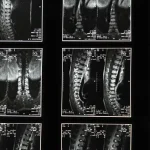
The most common move is to treat clear imaging as proof of no injury. This is scientifically illiterate, and it fails for a specific reason.
Trauma triggers a systemic release of pro-inflammatory cytokines — TNF-α, IL-6 and IL-1β — which lower pain thresholds and sensitize the nervous system. A significant brain or spinal injury is a metabolic event as much as a structural one, a state in which the energy supply to neural tissue cannot meet demand.
Axonal shearing — the stretching and tearing of the brain’s long connecting fibers — occurs during high kinetic-energy transfer, including in low-speed collisions where the vehicle frame did not visibly deform. A brief examination cannot quantify it, and neither can a conventional scan. That does not make it absent. More on why conventional imaging misses this
Diagnostic error is also more common than the confident tone of these reports suggests. A systematic review of 53 autopsy series by Shojania and colleagues (JAMA, 2003) found a median major diagnostic error rate of 23.5% — errors that, had they been known, would have affected treatment.
One caveat belongs with that number, and it cuts against overuse: the same review found major errors declining by roughly 19% per decade. A 2003 figure describes an era, not today’s emergency department.
Preparing: stop being a patient, start being the custodian of your data
Three things change outcomes.
1 · Absolute consistency. The examiner is looking for friction between your accounts — the difference between what you told the emergency department, your treating physician, and the examiner. Inconsistency is read as unreliability even when it is just ordinary human imprecision. Say the same true thing every time.
2 · Document functional failure, not just pain. “It hurts” is subjective and easy to discount. Function is data.
- Weak: “My shoulder hurts a lot.”
- Strong: “I cannot lift my arm above shoulder height, so I have not been able to reach the top shelf at work since the collision.”
- Weak: “I don’t sleep well.”
- Strong: “I wake after about three hours and cannot get back to sleep; this has happened most nights since the injury.”
Describe what you can no longer do, how often, and since when. That converts a complaint into a record.
3 · Understand what a diagnostic block proves. IME range-of-motion testing is often rudimentary. A targeted diagnostic block is different in kind: if a precisely placed anesthetic reliably abolishes the pain and it returns as the block wears off, that is a physiological demonstration that the pain circuit exists and can be localized. It does not depend on anyone believing you. How this becomes admissible evidence
Why some people do not recover on schedule
There is an honest limitation in the standard model. A large majority of US adults are metabolically dysfunctional — the video cites roughly 12% as metabolically healthy, consistent with NHANES 2009–2016 analyses that put it under 12.2%; on the tighter criteria applied after 2021 the figure is under 7%.
If you are in that majority, injury tends to stick to you longer, because the biological terrain is inflamed before the trauma ever occurs. This is not a character failure and it is not evidence of exaggeration. It is a measurable difference in healing capacity that an examination lasting a few minutes is not designed to detect.
Frequently asked questions
Is an IME really independent?
The examination is requested and paid for by the insurer or defense. It is a forensic evaluation of your claim rather than treatment arranged on your behalf. Being clear-eyed about that is not a reason to be hostile — it is a reason to be well documented.
This is set out in The Fear Every Honest Patient Carries.
What should I say at an IME?
The truth, stated consistently. Describe specific functional limitations — what you cannot do, how often, and since when — rather than only rating pain. Avoid both minimizing and overstating; consistency across all your medical accounts matters more than emphasis.
That is the subject of “In My Experience” Is No Longer Enough: The Expert Witness After Daubert.
What happens if they accuse me of malingering?
A malingering opinion is an opinion, and it is answerable with objective evidence: diagnostic blocks, inflammatory markers, biomechanical analysis and documented functional loss. That is precisely why building an objective record before the examination matters.
This is set out in The Fear Every Honest Patient Carries.
Can I be injured if the car barely looked damaged?
Yes. When a vehicle structure does not deform, the collision’s kinetic energy is transferred rather than absorbed. Axonal shearing is described in low-speed collisions where property damage was minimal.
This is set out in You Are Looking at the Wrong Number.
Do I have to attend the IME?
Attendance is usually required under the terms of your claim or policy, and the rules vary by state and case posture. Ask your attorney before declining or rescheduling — this article is not legal advice.
“In My Experience” Is No Longer Enough: The Expert Witness After Daubert goes through it in detail.
Where is Injury Experts located?
Injury Experts is at 4477 Woodson Rd, Suite 202, St. Louis, MO 63134, next to Lambert International Airport, serving the St. Louis region in Missouri and Illinois. Call (314) 887-5866 or text (314) 886-5902.
The mechanism is covered in You Are Looking at the Wrong Number.
Get your injury validated by science, not by an adjuster's spreadsheet
We turn subjective pain into objective, court-ready evidence — biomarkers, biomechanics and diagnostic blocks. Bring us your case before the insurer defines it for you.
Or call (314) 887-5866 · text (314) 886-5902
Key takeaways
- An IME is a forensic audit requested by the opposing party, not a second opinion.
- Claims software penalizes thin records; documentation density is protective.
- Clear imaging does not exclude inflammatory or axonal injury.
- Describe functional loss with specifics — frequency, limit, and start date.
- A positive diagnostic block is objective evidence independent of self-report.
Medically reviewed by Gurpreet Singh Padda, MD, MBA, MHP — Board Certified in Anesthesiology, Pain Medicine, Interventional Pain Management, Addiction Medicine, and Obesity Medicine.
This article is for general education and is not medical or legal advice. It does not create a physician–patient or attorney–client relationship. Consult your attorney about obligations relating to your claim, and do not start, stop, or change any medication without consulting your physician.