You went to the appointments. You did the physical therapy. You took the medication you did not want to take, and you took it as prescribed. The pain came back anyway.
The usual explanation offered at that point is that you must not have tried hard enough, or that this is simply your life now. Both are wrong, and both are convenient. There is a third explanation that almost nobody checks: the treatment was applied to tissue that was in no biological condition to heal.
Watch on YouTube: Why Your Pain Doesn't Heal: Metabolic Terrain
Pain is a signal, not a diagnosis
The assembly-line model treats pain as the thing to be eliminated. But pain behaves much more like a check-engine light: it is the output of a system reporting that something upstream has gone wrong. Silence the light and you have changed nothing about the engine.
This distinction is not philosophical. It determines what you measure.
The furnace nobody looks at
Visceral fat is not inert storage. In a metabolically dysfunctional state it behaves as an active endocrine organ: white adipose tissue recruits immune cells that secrete pro-inflammatory cytokines, prominently tumor necrosis factor alpha (TNF-α) and interleukin-6 (IL-6).
When those markers stay chronically elevated, they drive neuroinflammation and contribute to central sensitization — a state in which the nervous system amplifies incoming signals, so light touch or ordinary movement begins to register as injury.
The practical consequence is blunt. If the systemic inflammatory fire is not brought down, the tissue is too inflamed to heal, and any local repair you attempt is working against the environment it sits in.
What the data says about “unexplained” pain
Fibromyalgia and insulin resistance. Pappolla and colleagues, writing in PLOS ONE in 2019, found that fibromyalgia patients separated from control populations by HbA1c — a surrogate marker of insulin resistance — once age was accounted for. A subgroup with pre-diabetic or diabetic HbA1c who were treated with metformin showed marked improvement in widespread pain.
Read that carefully, because the framing matters. The paper is explicitly titled a preliminary report, and it studied 23 patients. It is a hypothesis worth taking seriously, not a settled prevalence figure. In particular, the “79% of fibromyalgia patients show insulin resistance” number that circulates in discussions of this work — including in the source video — does not appear in that paper, and we have not been able to source it. It is therefore not stated as fact here.
Leptin. Leptin is usually described as the satiety hormone. In a metabolically disordered body it also appears to act as a pro-nociceptive signal — one that promotes pain. Younger and colleagues (Journal of Women’s Health, 2016) tracked daily serum leptin against daily self-reported pain and found leptin predicted roughly 49% of the pain variance. In osteoarthritis, higher leptin in joint fluid is associated with the matrix-degrading enzymes that break down cartilage.
The leptin finding rests on a very small study. That daily-tracking arm followed three women. A correlation that strong in three people is a reason to investigate, not a reason to conclude. Anyone citing “leptin explains half of fibromyalgia pain” without saying n=3 is overstating it.
Against that background, treating the problem with a steroid injection or an opioid alone is, again, silencing the smoke alarm while the house burns.
Sleep, cortisol and the repair window
Tissue repair is not a daytime activity. Without restorative sleep — roughly seven to eight hours — morning cortisol tends to remain elevated. A persistently high-cortisol environment is catabolic: it favors breakdown over rebuilding. Sleep disruption is also associated with higher systemic CRP and IL-6.
A rehabilitation plan that ignores sleep is asking the body to rebuild during the only hours it has been told to tear down.
The part of medicine that is not biology
Social circumstance is not a soft factor bolted onto the clinical picture; it is a biological input. Financial strain and loneliness function as chronic stressors, keeping the system in a state of high alert that works directly against the down-regulation of pain signaling. The meta-analysis by Holt-Lunstad and colleagues (Perspectives on Psychological Science, 2015) found social isolation associated with a 29% increase in mortality risk, loneliness 26%, and living alone 32% — and concluded the risk from lacking social relationships exceeds that from obesity.
In our own practice, the overwhelming majority of patients carry at least one significant social determinant of this kind. That is a practice-reported observation from our patient population, not a published statistic, and individual results vary.
What we do instead
We start with a physiological audit rather than a procedure schedule: markers such as high-sensitivity CRP and LDL particle number, alongside the metabolic picture, to establish what condition the terrain is actually in.
Where it is indicated, metabolic medical management — including insulin sensitizers — is used to lower the inflammatory load before or alongside interventional treatment. The use of insulin-sensitizing medication specifically to reduce pain is investigational rather than an established indication. Do not start, stop, or change any medication without consulting your physician.
There is also a reason to sequence care this way. Interventional procedures have been reported to deliver poorer relief in patients with elevated inflammatory markers. If that holds, then fixing the terrain is not an alternative to the procedure — it is what makes the procedure work.
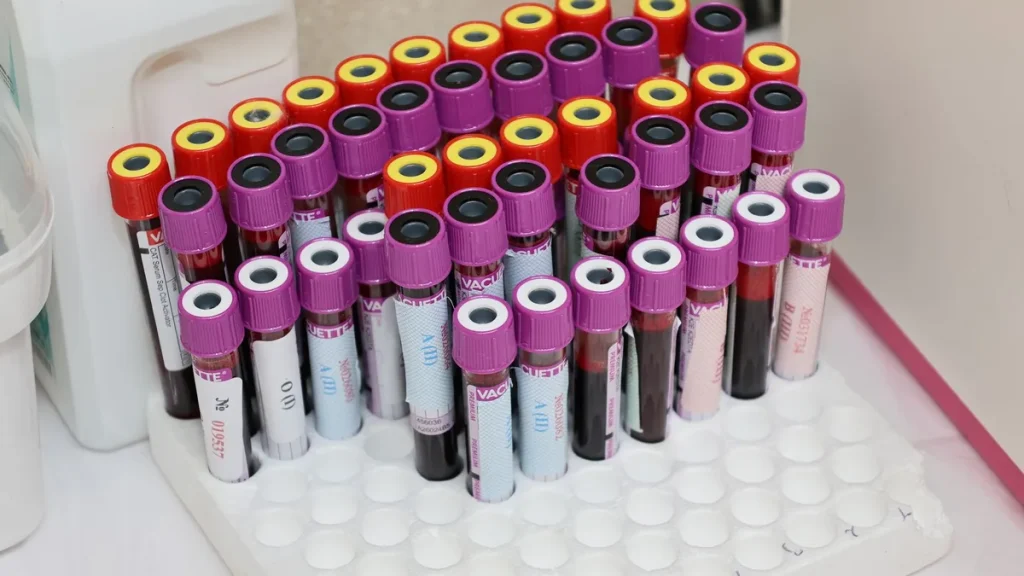
The same terrain decides what an orthobiologic injection can do, because the injectate is manufactured from your own blood. Why the terrain is measured before anything is injected.
Frequently asked questions
Why did my injections stop working?
One under-examined possibility is the biological environment. Elevated systemic inflammation is associated with poorer response to interventional pain procedures. A local treatment delivered into a persistently inflamed system has to fight that background, and the benefit often fades faster.
The Injection Is Made From You. That Is the Whole Problem. goes through it in detail.
What does insulin resistance have to do with pain?
Metabolic dysfunction promotes chronic low-grade inflammation, which drives neuroinflammation and central sensitization — a lowered threshold at which the nervous system reports pain. Research has also found high rates of insulin resistance in fibromyalgia patients, though causation is not established.
See The Injection Is Made From You. That Is the Whole Problem..
Does poor sleep really make pain worse?
Yes, and the mechanism is plausible: insufficient restorative sleep is associated with elevated cortisol and higher inflammatory markers including CRP and IL-6. Cortisol-dominant states favor tissue breakdown over repair.
See The Injury You Can Photograph Is the Smaller Half.
Is this saying my pain is caused by my weight?
No. It is saying that metabolic inflammation — which is not the same thing as body size, and which occurs in people of all builds — changes how tissue heals and how the nervous system processes signals. The target is the inflammatory state, not appearance.
The detail is in The Injury You Can Photograph Is the Smaller Half.
What tests would tell me if this applies to me?
A metabolic and inflammatory panel is the starting point: high-sensitivity CRP, markers of insulin resistance, and lipid particle measures, interpreted alongside your sleep, history and clinical exam. No single value is decisive.
The mechanism is covered in The Injection Is Made From You. That Is the Whole Problem..
Where is Injury Experts located?
Injury Experts is at 4477 Woodson Rd, Suite 202, St. Louis, MO 63134, next to Lambert International Airport, serving the St. Louis region in Missouri and Illinois. Call (314) 887-5866 or text (314) 886-5902.
The Injury You Can Photograph Is the Smaller Half goes through it in detail.
Get your injury validated by science, not by an adjuster's spreadsheet
We turn subjective pain into objective, court-ready evidence — biomarkers, biomechanics and diagnostic blocks. Bring us your case before the insurer defines it for you.
Or call (314) 887-5866 · text (314) 886-5902
Key takeaways
- Pain is a signal from a system, not a standalone diagnosis.
- Visceral fat drives TNF-α and IL-6, promoting neuroinflammation and central sensitization.
- Inflamed tissue heals poorly, which is one reason good treatments fail.
- Sleep and social stress are biological inputs, not lifestyle footnotes.
- Several figures in this area are suggestive rather than settled — including the fibromyalgia insulin-resistance and leptin findings.
Medically reviewed by Gurpreet Singh Padda, MD, MBA, MHP — Board Certified in Anesthesiology, Pain Medicine, Interventional Pain Management, Addiction Medicine, and Obesity Medicine.
This article is for general education and is not medical advice. It does not create a physician–patient relationship. Do not start, stop, or change any medication without consulting your physician.