After a car accident, pain and suffering are two different things. Pain is the signal coming from injured tissue. Suffering is the extra weight that fear, not knowing, feeling alone and feeling it was all for nothing stack onto that signal. You cannot talk a broken bone out of hurting, but you can work on all four of those in the first weeks, and that work changes how the recovery goes.
I learned this one this month, as a crash patient.
What happened in my own crash?
It was a Sunday, October 11, 2026, around 5:50 in the morning. On the drive to my workout I spotted a burning car on the highway, pulled over and helped the woman inside climb out; while I steered her to the edge of the road, a speeding driver slammed into me and never stopped, and she came out of it fine. My tally: the medial malleolus and the fibula of my left leg both broke, a gash near 15 cm opened at the ankle and tore the tibial artery, I bled out roughly 40% of my blood volume, the trauma team was called, and two ribs cracked; no operation was needed, and the wound was closed. The longer account of the ER decisions is in what I did about pain medicine in the first days after the crash.
Why did it hurt so little at first?
For the first few hours, it barely registered. A serious injury fires a stress response. The brain sends signals down the spinal cord that turn incoming pain traffic down, using the body’s own opioids, adrenaline and several other chemical systems. How strongly that system kicks in varies a great deal from person to person.1
That was one of two reasons I said no each time the ER offered an opioid. The second: a first exposure is how long-term opioid use gets its start. In a study of emergency patients with acute pain who had not been taking opioids, those who filled an opioid prescription had 1.8 times the adjusted odds of using opioids again a year later. Those who got a prescription and never filled it showed no significant rise.2 Why open that door for a drug my body might never need? That was my decision about my body. It may not be the right one for yours.
What did the pain feel like once the adrenaline wore off?
Then the adrenaline faded, and the ankle and ribs made their case. There was a lot of pain. There was very little suffering.
Why the gap? I understood what was happening to my body. I had a plan. There was a reason behind the injury: I had pulled over for a stranger. I had people around me. And I expected to recover.
Reverse that list and you find the four forces that do the converting: fear, uncertainty, isolation and meaninglessness. Every one of them is something you and your clinician can work on.
Why does fear make pain after a crash worse?
Fear makes people brace, stop moving and scan for every twinge. Researchers combined the results of 335 studies, covering 65,340 people who live with clinical pain. Fear of pain and catastrophizing (expecting the worst) tracked with disability, anxiety, depression and low mood at medium-to-large strength, and with the pain’s intensity at medium strength.3 Those are associations, not proof of cause.
What to work on: say the fear out loud to your doctor. “Is this permanent?” “Did I wreck my spine?” After a crash, the fear is often bigger than the injury. Get a straight answer, and the fear has less to feed on. Early fear is also one of the signals we watch when predicting who will develop chronic pain after an injury.
How does not knowing what is wrong change your pain?
Uncertainty is not just stressful. It turns pain up. Researchers showed volunteers how a crowd had scored a painful burst of heat, then gave the volunteers that same heat. The more the crowd disagreed, the more it hurt, and the extra pain rose and fell with activity in the periaqueductal gray, a brainstem region that dials pain up or down.4 The authors put it in three words: uncertainty increases pain.
What to work on: get a diagnosis, not a shrug. You are owed an exam, the right imaging, a name for each injury and a realistic timeline. That explanation is not a courtesy. It is part of the treatment, which is why our car accident injury treatment starts with a physician exam and a written plan.
Why does being alone after an accident make it hurt more?
Crashes cut people off. You may be out of work, unable to drive and stuck on the couch. Connection matters to the nervous system more than most people expect. Pain from a lab stimulus dropped when people simply looked at a picture of their romantic partner.5
What to work on: let people help. Tell one person each day how you are really doing. Keep your appointments, even the short ones, because they keep you tied to a team that knows your case. If the crash left you jumpy in traffic, unable to sleep or not yourself, read about the psychological aftermath of a car accident and tell us at your next visit.
What does meaning have to do with healing from a crash?
Viktor Frankl, in Man’s Search for Meaning, quoted Nietzsche: “He who has a why to live for can bear almost any how.”
My injury came with a built-in why. Getting hit was the price of pulling over for someone in trouble. That did not make the fractures hurt less. It made the pain make sense, and pain that makes sense is lighter to carry.
Your why does not have to come from the crash. It can be the grandchild you want to pick up or the job you want back. Write it down and bring it to your visits; it gives every exercise a point.
Why does remembering what matters shrink the fear?
Death and I have crossed paths more than once, sometimes up close and sometimes secondhand. On October 11 my body gave up about 40% of its blood volume. Stoic philosophers had a two-word habit for moments like that: memento mori, Latin for remembering that you, too, will die. Gloom was never the goal. They used it to see a hardship at its real size. Held up against what truly matters, a broken ankle is a broken ankle. Marcus Aurelius wrote in his Meditations (7.33, translated by George Long): “About pain: the pain which is intolerable carries us off; but that which lasts a long time is tolerable.” Pain with a name and a finish line loses most of its fear. One warning, though. Stoicism is not keeping quiet and gritting your teeth. Give your doctor the honest number, since it steers the plan, and remember that a patient who needs an opioid has not flunked some toughness exam.
What can you use for the pain while you work on the rest?
Working on suffering does not replace treating pain. A randomized emergency-department trial gave 411 adults with fresh arm or leg pain either 400 mg of ibuprofen paired with 1,000 mg of acetaminophen or one of three opioid combinations, and at two hours the relief came out even. Only one dose was tested, and nobody tracked side effects.6 Ibuprofen is not safe for everyone, so ask first.
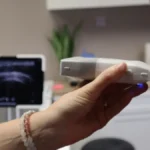
TENS sends a mild, steady electrical signal through the skin that competes with pain signals on their way to the spinal cord. Pooled across 381 trials and 24,532 people, pain ran lower while the unit was on or just after, compared with sham devices; the evidence rated moderate in certainty, and no serious harms appeared.7 It is a tool, not magic. See how a TENS therapy session works.
My own first days ran on ibuprofen and acetaminophen, TENS, electrical muscle stimulation, a vibration plate on one spot and infrared light. Not one workday was lost, and by October 26 I was fully functional and doing complete procedure days again.
When is an opioid the right call after a crash?
Sometimes it is. Opioid stewardship is not a ban. It is harm reduction fitted to one person: the smallest exposure that works, with function kept. Our rule is short: “We treat patients as we find them, not as we anticipate them.” A patient whose broken ribs make every breath hurt may need an opioid, and should get one. Severe pain left untreated costs sleep, breathing and movement.
Patients already taking opioids who want to cut down get help here too: interventional procedures take on part of the pain while the dose steps down slowly enough to avoid withdrawal. Declining was my choice in my body. I am not a martyr, and my choice may not be yours.
Frequently asked questions about pain and suffering after a crash
Is suffering after a car accident all in my head?
No. Fear, uncertainty and being alone change how the brain and spinal cord handle pain signals. In lab work, uncertainty alone made pain worse through a brainstem pain-control center. Working on those things is real treatment, not positive thinking.
How soon after a crash should I get checked?
Within days, even if you feel fine. Stress chemistry can hide an injury for hours. The exam also gives you a diagnosis and a plan, and those two things take a lot of the uncertainty away.
Will I heal faster if I refuse opioids?
Not by itself. Some crash patients need an opioid, and taking one when it is needed is good care. What matters is the smallest amount that works, for the shortest time, with a plan to stop.
Sore, worried or stuck since the crash?
Come in with your questions and your discharge papers. You should leave knowing what is injured, what the plan is and what recovery should look like.
Or call or text us.
Sources
- Butler RK, Finn DP. Stress-induced analgesia. Progress in Neurobiology. 2009;88(3):184-202. doi:10.1016/j.pneurobio.2009.04.003 (PMID 19393288)
- Hoppe JA, Kim H, Heard K. Association of emergency department opioid initiation with recurrent opioid use. Annals of Emergency Medicine. 2015;65(5):493-499.e4. doi:10.1016/j.annemergmed.2014.11.015 (PMID 25534654)
- Rogers AH, Farris SG. A meta-analysis of the associations of elements of the fear-avoidance model of chronic pain with negative affect, depression, anxiety, pain-related disability and pain intensity. European Journal of Pain. 2022;26(8):1611-1635. doi:10.1002/ejp.1994 (PMID 35727200)
- Yoshida W, Seymour B, Koltzenburg M, Dolan RJ. Uncertainty increases pain: evidence for a novel mechanism of pain modulation involving the periaqueductal gray. Journal of Neuroscience. 2013;33(13):5638-5646. doi:10.1523/JNEUROSCI.4984-12.2013 (PMID 23536078)
- Master SL, Eisenberger NI, Taylor SE, Naliboff BD, Shirinyan D, Lieberman MD. A picture’s worth: partner photographs reduce experimentally induced pain. Psychological Science. 2009;20(11):1316-1318. doi:10.1111/j.1467-9280.2009.02444.x (PMID 19788531)
- Chang AK, Bijur PE, Esses D, Barnaby DP, Baer J. Effect of a Single Dose of Oral Opioid and Nonopioid Analgesics on Acute Extremity Pain in the Emergency Department: A Randomized Clinical Trial. JAMA. 2017;318(17):1661-1667. doi:10.1001/jama.2017.16190 (PMID 29114833)
- Johnson MI, Paley CA, Jones G, Mulvey MR, Wittkopf PG. Efficacy and safety of transcutaneous electrical nerve stimulation (TENS) for acute and chronic pain in adults: a systematic review and meta-analysis of 381 studies (the meta-TENS study). BMJ Open. 2022;12(2):e051073. doi:10.1136/bmjopen-2021-051073 (PMID 35144946)
Medically reviewed by Dr. Gurpreet Singh Padda, MD, MBA, MHP · Last reviewed October 30, 2026