If you have an injury claim, you will hear it. Somewhere in your history there is a note — a bad back at twenty-four, a disc bulge seen incidentally, a shoulder that ached one winter — and it will be produced as proof that the collision changed nothing.
The record request is not neutral curiosity. It is a search for any prior mention that lets your current condition be attributed elsewhere. And the argument only works if nobody examines the biology.
Watch on YouTube: Proving Causality and The Science of Exacerbation
A finding is not a condition
Here is the distinction the argument depends on eliding.
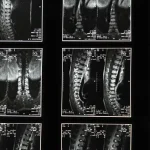
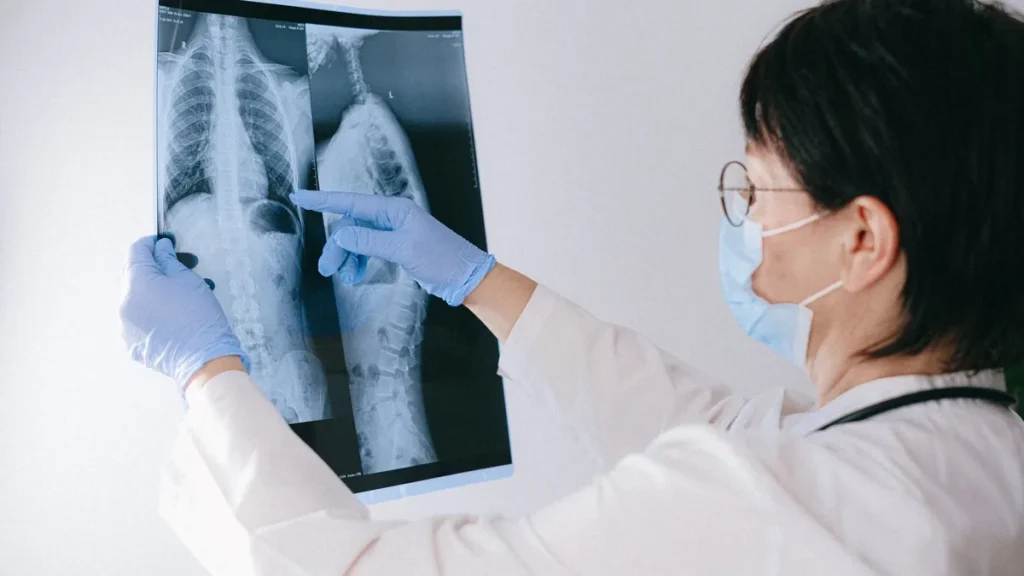
Imaging findings are extremely common in people with no symptoms at all. A disc bulge visible on a scan, in someone with full function and no pain, describes a stable system. It is a finding, not a disease. It was not limiting you, it was not being treated, and it was not going to be — until something changed.
The relevant question is therefore not did anything exist before? It is what state was the system in, and what changed it? A stable system that becomes an unstable one has undergone an event. That transition is the injury.
The physics the argument ignores
Energy is conserved. In a collision it goes somewhere.
When a vehicle frame crumples, it is absorbing kinetic energy — that is what crumple zones are engineered to do. When a frame does not deform, that energy has not disappeared. It has been transferred, and the occupant is what it was transferred into.
This is why low property damage is such a weak proxy for occupant injury, and why the inference “the car looks fine, so you are fine” is not a medical judgment at all. Rapid acceleration and deceleration can produce axonal shearing — the microscopic stretching and tearing of the brain’s long connecting fibers.
You do not need to strike your head to sustain a traumatic brain injury. The acceleration alone is sufficient, and what follows is a metabolic crisis in which the energy available to injured neural tissue cannot meet the demand of repair.
The biology of exacerbation
Trauma triggers a systemic cytokine cascade — TNF-α, IL-6 and IL-1β prominently among them. Sustained, this drives neuroinflammation and can establish central sensitization: a state in which the nervous system itself remains hyperactive and amplifies pain signals long after the tissue damage has settled.
That last clause is the crux of the exacerbation argument. The metal gets repaired. The nervous system does not necessarily return to its prior setting. A person who was asymptomatic with an incidental finding, and who is now symptomatic with a sensitized nervous system, is not the same physiological system with an older complaint. Something happened.
The image often used for this is a match in a gasoline-soaked room. The fuel was present; it was also inert. The match is not incidental just because it was small.
Documenting it
Two things convert this from argument to evidence.
Objective inflammatory markers. Documenting the cytokine signaling associated with the injury demonstrates a physiological response, not a recollection of one.
Functional failure rather than pain scores. “My back hurts” invites discounting. “I cannot sleep more than three hours” is a measurable failure of function with a plausible inflammatory mechanism, and it is far harder to attribute to a disc bulge that was silent for a decade. How to document this before an examination
A note on rigor: the inference from an elevated marker to a specific legal causation conclusion is not automatic, and a competent opposing expert will probe it. Inflammatory markers are non-specific — they rise for many reasons. Their value is in a pattern assembled alongside mechanism, timeline and function, which is exactly why a single number should never be the whole argument. What a court actually requires
An injured joint also raises the odds of arthritis for decades afterward, which is a different argument from the one the adjuster is making about your imaging. Post-traumatic arthritis, grading scales, and what the knee guidelines say.
Frequently asked questions
Can I claim if I had a prior injury to the same area?
Generally yes — the legal principle is that a defendant takes the plaintiff as found, and aggravation of a pre-existing condition is typically compensable. The medical task is to distinguish your prior baseline from your current state. Your attorney should advise on how this applies in your jurisdiction.
My disc bulge showed on a scan before the accident. Does that end my claim?
Not by itself. Imaging findings are common in people without symptoms. What matters is whether the finding was causing functional limitation before the event, and whether your function and physiology changed after it.
Can I have a brain injury if I never hit my head?
Yes. Axonal shearing results from rapid acceleration and deceleration of the brain within the skull. Direct impact is not required.
Why does the insurer keep requesting more records?
Two reasons usually operate together: the search for any prior mention that supports a pre-existing argument, and delay itself, which increases financial pressure to settle.
What evidence shows an old problem was made worse?
A combination: documented pre-injury function, the mechanism and forces involved, post-injury inflammatory markers, objective findings such as diagnostic blocks, and specific dated functional losses. No single element carries it alone.
Where is Injury Experts located?
Injury Experts is at 4477 Woodson Rd, Suite 202, St. Louis, MO 63134, next to Lambert International Airport, serving the St. Louis region in Missouri and Illinois. Call (314) 887-5866 or text (314) 886-5902.
Get your injury validated by science, not by an adjuster's spreadsheet
We turn subjective pain into objective, court-ready evidence — biomarkers, biomechanics and diagnostic blocks. Bring us your case before the insurer defines it for you.
Or call (314) 887-5866 · text (314) 886-5902
Key takeaways
- An asymptomatic imaging finding is a stable system, not a condition.
- Energy not absorbed by the vehicle is transferred to the occupant.
- Axonal shearing does not require a head strike.
- Central sensitization can persist after tissue damage resolves.
- Inflammatory markers are non-specific — they belong in a pattern, not alone.
Medically reviewed by Gurpreet Singh Padda, MD, MBA, MHP — Board Certified in Anesthesiology, Pain Medicine, Interventional Pain Management, Addiction Medicine, and Obesity Medicine.
This article is for general education and is not medical or legal advice. It does not create a physician–patient or attorney–client relationship. Questions about causation in your specific claim should be directed to your attorney.