
If you are genuinely injured, there is a particular dread that sits underneath the whole process: that someone will decide you are making it up.
It is a rational fear, because the accusation does not require evidence. It only requires an absence — a clear scan, a normal reflex exam, a set of complaints that outlast what the pictures show. The label of malingering is then applied to the gap.
The answer to an absence of data is not louder insistence. It is data.

Watch on YouTube: Avoiding the Malingering Label: The Science of Objectivity
Why reporting pain is playing their game
Claims are substantially valued by software. Black-box systems — Colossus most often named — reduce a person to a set of codes, and came with the vendor’s own boast, documented by the Consumer Federation of America, of “up to 20 percent” reduction in bodily injury claims — achieved largely by discounting subjective reports of pain.
Sourced: Consumer Federation of America, Low Ball: An Insider’s Look at How Some Insurers Can Manipulate Computerized Systems (2012). CFA also documented that Allstate’s payout per premium dollar in auto injury cases fell from about 63 cents to 47 cents over a decade. This is the vendor’s and insurer’s own record — not a plaintiff-side estimate.
Read that mechanism carefully, because it tells you what to do. The discount is applied specifically to the subjective. A record consisting of pain ratings is therefore a record built precisely out of the material these systems are designed to devalue.
The counter is not to insist harder. It is to document the why alongside the what — findings that do not depend on anyone’s belief in your sincerity.
The two arguments used against you
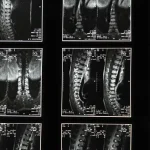
The normal MRI. If it is not visible, it is not there. This ignores central sensitization — a state of nervous-system hyperactivity in which pain signals are amplified despite minimal peripheral input. Central sensitization is a well-described phenomenon in the pain literature and it is functional rather than structural. A conventional MRI is not an instrument that can exclude it.
The minor impact soft tissue defense. Low speed, therefore no injury. This is a failure of basic biomechanics. A frame that does not crumple absorbs less energy and transfers more of it to the occupant. The whip of the neck at modest closing speeds is sufficient to produce microscopic shearing of axons — and you do not have to strike your head to sustain a brain injury.
A useful move here: if the defense asserts that the forces were too low to cause injury, that is a quantitative claim, and it can be asked to produce the quantitative basis. G-force estimates and occupant kinematics are calculable. An assertion offered without them is an opinion wearing the costume of physics.
What objective looks like
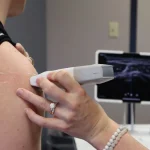
Diagnostic blocks. A precisely targeted anesthetic block that reliably abolishes a specific pain — and lets it return as the block wears off — is a physiological audit of the circuit. A positive, reproducible response validates the pain source without relying on self-report.
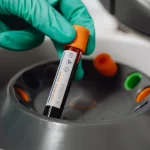
Cytokine signaling. Persistent elevation of TNF-α, IL-6 and IL-1β is associated with the neuroinflammation that keeps pain going after visible injury resolves. The video notes that Mendelian randomization studies support these cytokines as drivers in pain phenotypes rather than mere bystanders — a claim that must be verified against the specific studies before it is published or testified to, since MR findings in this area vary by cytokine and by outcome.
Metabolic terrain. Pre-existing insulin resistance or metabolic syndrome compromises recovery capacity, and high systemic inflammation makes an injury physiologically more severe. The video also cites research reporting that normoglycemic patients with chronic low back pain show significantly higher postprandial glycemic responses. This finding requires citation confirmation before use.
The framing that matters: a patient who recovers slowly because their biological terrain is compromised is not exaggerating. That is a collision of two problems, and it is measurable. More on the terrain
Document function, not adjectives
The single most useful habit is to convert complaints into records.
- Not “it hurts a lot” → “I cannot sleep more than three hours most nights.”
- Not “my arm is bad” → “I cannot lift overhead, so I stopped doing the part of my job that requires it, as of the week after the collision.”
Specific, dated, functional. That is what survives a skeptical reader.
Turning the audit around
One more thing is worth knowing: the black box can be questioned. It is legitimate to ask what software was used to value the claim and what injury codes were assigned. Whether that request succeeds depends on jurisdiction, posture and your attorney’s judgment — but the asymmetry of scrutiny is worth naming. Your records are examined exhaustively. The model that prices them is usually not examined at all.
Frequently asked questions
What does malingering actually mean?
Malingering is the deliberate feigning or gross exaggeration of symptoms for an external incentive. It is a specific accusation, not a synonym for “unexplained.” Symptoms that lack a structural explanation are not, by that fact, fabricated.
That is the subject of The “Independent” Medical Examination Is Not Independent.
How can pain be proven if my MRI is normal?
Through findings that do not depend on imaging: a reproducible response to a diagnostic block, objective inflammatory markers, documented functional loss, and biomechanical analysis of the forces involved.
“In My Experience” Is No Longer Enough: The Expert Witness After Daubert explains what that looks like.
What is the minor impact soft tissue defense?
The argument that a low-speed collision with little vehicle damage cannot cause significant injury. It misstates the physics — a frame that does not deform transfers more energy to occupants, not less.
This is set out in Your Claim Is Not Being Evaluated. It Is Being Scored..
Can I really ask which software valued my claim?
You can ask. Whether the answer is obtainable depends on jurisdiction and the stage of the case, and it is a question for your attorney rather than your physician.
The detail is in You Are Looking at the Wrong Number.
Does a slow recovery make me look like I am exaggerating?
It should not. Recovery speed varies with metabolic and inflammatory status, and a compromised biological terrain predicts a slower course. Documenting that terrain reframes slow recovery as a measured finding rather than an inconsistency.
There is more on this in “In My Experience” Is No Longer Enough: The Expert Witness After Daubert.
Where is Injury Experts located?
Injury Experts is at 4477 Woodson Rd, Suite 202, St. Louis, MO 63134, next to Lambert International Airport, serving the St. Louis region in Missouri and Illinois. Call (314) 887-5866 or text (314) 886-5902.
That is the subject of The “Independent” Medical Examination Is Not Independent.
Get your injury validated by science, not by an adjuster's spreadsheet
We turn subjective pain into objective, court-ready evidence — biomarkers, biomechanics and diagnostic blocks. Bring us your case before the insurer defines it for you.
Or call (314) 887-5866 · text (314) 886-5902
Key takeaways
- Claims software discounts subjective reports specifically — so build an objective record.
- A normal MRI cannot exclude central sensitization.
- The minor-impact defense inverts the physics of energy transfer.
- Diagnostic blocks and inflammatory markers do not depend on being believed.
- Slow recovery on a compromised metabolic terrain is a finding, not a contradiction.
Medically reviewed by Gurpreet Singh Padda, MD, MBA, MHP — Board Certified in Anesthesiology, Pain Medicine, Interventional Pain Management, Addiction Medicine, and Obesity Medicine.
This article is for general education and is not medical or legal advice. It does not create a physician–patient or attorney–client relationship. Do not start, stop, or change any medication without consulting your physician.