Accident and Injury Experts

Blogs – Page 2 – Accident and Injury Experts

Somewhere in this process you probably assumed a person was weighing what happened to you. In most cases that is not what is occurring. Your injury is being converted into codes, and the codes are being scored by software.

Understanding the scoring is not cynicism. It is the difference between being surprised by the process and being prepared for it.

How insurance adjusters devalue injury claims and what you need to know — video thumbnail

Watch on YouTube: How insurance adjusters devalue injury claims and what you need to know

The scoring engine

Colossus is the most widely used system for valuing pain and suffering, operating on a large body of proprietary rules — the video cites over 10,000. It is a closed system, which means the adjuster using it generally cannot audit it either.

One consequence matters enormously and is almost never explained to claimants: the severity score depends on the language in your medical records. If the treating physician does not document findings in the terminology the system recognizes, the score drops — not because the injury is milder, but because the record did not encode it in a form the model reads.

The Consumer Federation of America documented how the tuning of these rules reduces the monetary value assigned to severity points — and recorded the vendor’s own sales claim that the program would “immediately reduce the size of bodily injury claims by up to 20 percent.” Over one decade, CFA found, Allstate’s payout per premium dollar in auto injury cases fell from roughly 63 cents to 47 cents.

The broader critique follows from that: adjusters are no longer exercising judgment so much as entering data into a system that flags any offer exceeding a pre-programmed range.

Dr. Padda walked through the mechanics of Colossus and the related claims systems — Xactimate among them — in an earlier talk, including how ZIP code and demographic inputs enter the determination:
Your Case Is Not Being Read. It Is Being Scored. — video thumbnail

Watch on YouTube: Your Case Is Not Being Read. It Is Being Scored.

Tactic one — delay engineered to exhaust you

For an insurer, an unpaid claim is capital that can be invested in the meantime. This is the well-documented economics of insurance float, analyzed in the insurance economics literature (the video attributes this to Harrington and Niehaus).

The behavioral consequence is straightforward. Redundant record requests and procedural friction extend the timeline, and as the timeline extends, the claimant’s financial position deteriorates. Willingness to accept a low offer is not a fixed trait — it is a function of how long you can hold out.

This is why delay should be read as a strategy rather than as disorganization, and why the financial pressure it creates has physiological consequences too. The biology of that pressure

Tactic two — disputing medical necessity

The second move is to ask for a structural lesion and to treat its absence as proof that treatment was unnecessary. No fracture, no procedure.

This silos the injury away from its actual mechanism. Persistent cytokine signaling — TNF-α, IL-6 — sustains an inflammatory state that maintains pain, and central sensitization means the nervous system itself has been retuned so that pain is generated centrally, often independent of the original site.

If pain can be characterized as unexplained, then treatment aimed at it can be characterized as experimental, and denied on that basis. The counter is objective documentation of the mechanism rather than louder assertion of the symptom.

Tactic three — the minor impact soft tissue defense

MIST argues that low vehicle damage means low occupant injury. It inverts the physics.

A rigid frame that does not crumple absorbs less energy and transfers more of it to the occupant. The frame is, in effect, the fuse — and when it does not blow, the load goes elsewhere. Low-speed collisions can transfer substantial accelerations to the cervical spine and head, and the resulting whip can produce microscopic axonal shearing. You do not have to strike your head to sustain a brain injury. How this is proven

The part that is hardest to hear

There is a body of research indicating that claim outcomes differ by race and by geography in ways that are not explained by the injuries themselves.

The best-documented mechanism is not hidden at all, and it is not an allegation: race- and gender-based wage tables.

When an economist projects what an injured person would have earned over a lifetime, that projection has to start from some baseline. A substantial share of forensic economists have used race and gender statistics in building it. A National Association of Forensic Economics survey found 43.6% would use both race and gender data in projecting lost wages, and a further 48.1% would use gender-specific data. Because women and people of color have historically earned less, those tables produce systematically lower projected lifetime earnings for identical injuries and identical qualifications.

The effect is not marginal. In one widely reported comparison, a young Black woman’s projected future lost wages came to roughly half those of a white man of the same age with identical education and an identical injury.

The logic is worth naming plainly: the method takes documented historical discrimination and re-enters it as a prediction about one individual’s future. The disparity is imported, not observed.

You do not have to take our word for it — a legislature agreed

This is the strongest evidence available that the practice was real, because it is not an argument at all. It is a statute.

Martha Chamallas of Ohio State documented the mechanism across US and Canadian cases in Loyola of Los Angeles Law Review (2005), and developed it at length with Jennifer Wriggins in The Measure of Injury: Race, Gender, and Tort Law (NYU Press, 2010).

California then acted on it. SB-41, now California Civil Code § 3361, was signed in 2019 and took effect January 1, 2020. Its operative language is one sentence:

“Estimations, measures, or calculations of past, present, or future damages for lost earnings or impaired earning capacity resulting from personal injury or wrongful death shall not be reduced based on race, ethnicity, or gender.”

A legislature does not prohibit a practice that was not occurring. California was the first state to do so. A federal counterpart — the Fair Calculations in Civil Damages Act — has been introduced repeatedly in Congress and has not been enacted.

What this means if your claim is in Missouri or Illinois. We looked, and we did not find a statute comparable to § 3361 in either state. So far as we can determine, nothing in Missouri or Illinois law currently bars an economist from using race- or gender-based wage tables in projecting your future earnings. If your damages include lost earning capacity, that is a question worth putting to your attorney directly: what tables is the projection built on?

What peer review actually shows about claim adjudication

There is one rigorous study directly on the question of whether insurers pay claims differently by race, and it is worth describing precisely rather than loosely.

Lin, Browne and Hofmann (Journal of Risk & Insurance, 2022) examined earthquake insurance claims from eight Oklahoma earthquakes between 2010 and 2016 — the induced seismicity associated with oil and gas drilling — linking Oklahoma Department of Insurance records to USGS and Census data. Controlling for other variables, they found that claims from areas with higher percentages of Black population were less likely to be paid, and when paid, were paid less.

The study also closes the obvious escape hatch. A skeptic would suggest those areas simply filed weaker claims. The authors tested that and found no evidence that Black, Native or Asian population share was associated with marginal claim filing — and that areas with higher Hispanic populations filed fewer marginal claims.

Now the honest limits, which matter here. This is property insurance in Oklahoma, not bodily injury. It measures area-level racial composition, not an individual claimant’s race. It does not establish that your personal injury claim will be adjudicated differently. What it does establish is that disparate claim adjudication by racial composition is a documented phenomenon in US insurance rather than a rhetorical flourish — and that is a materially different starting point for a conversation with an adjuster.

What we are still not claiming. The source video attributes to the Journal of Empirical Legal Studies a finding that identical injuries receive lower settlements “based on race alone.” We searched for it specifically and could not locate the paper; the assertion circulates widely across legal marketing sites, always without a citation. It is therefore not repeated here. The video also refers to this earthquake research as “the St. John study” — that appears to be a garbling of the lead author’s institution, St. John’s University, rather than an author’s name.

What actually answers a scoring engine

Not indignation. Density.

These systems discount the subjective and reward the documented. That means objective findings — inflammatory markers, diagnostic blocks, neurocognitive testing, biomechanical analysis — alongside specific, dated functional loss. Inflammation, sleep and movement are treated as clinical targets because they determine recovery, and because measuring them produces the record that a model cannot easily discount.

Biologic line items are among the easiest for that process to reduce, and the reason is usually a confusion between coverage and evidence. Why not covered and not proven are different sentences.

Frequently asked questions

Why does my insurer keep asking for the same records?

Redundant requests extend the claim timeline. Because insurers earn investment returns on unpaid reserves and claimants’ financial resilience declines over time, delay tends to favor the insurer in both dimensions.

There is more on this in You Are Looking at the Wrong Number.

Can the wording in my medical records change my settlement?

Yes. Claims-scoring software derives severity from coded terminology in the records. Documentation that does not use recognized terms can produce a lower score for the same underlying injury.

See You Are Looking at the Wrong Number.

What is the MIST defense?

Minor Impact Soft Tissue — the argument that limited vehicle damage means limited injury. It misstates the physics, because a frame that does not deform transfers more energy to the occupant rather than less.

The Fear Every Honest Patient Carries goes through it in detail.

Is there really evidence of racial bias in claim settlements?

Yes, and the strongest proof is legislative rather than academic: California enacted Civil Code § 3361 in 2019, barring any reduction of lost-earnings damages “based on race, ethnicity, or gender.” Legislatures do not ban practices that are not happening. Separately, a 2022 study in the Journal of Risk & Insurance found earthquake insurance claims from areas with higher Black population share were less likely to be paid, and were paid less when they were. That study covers property insurance in Oklahoma rather than bodily injury, so it does not directly predict personal injury outcomes — but it shows the phenomenon is measurable, not merely alleged.

This is set out in The Fear Every Honest Patient Carries.

What should I do if I receive a lowball offer?

Speak with your attorney before responding, and focus on strengthening the objective record — documented functional loss, and testing that does not depend on self-report. This article is not legal advice.

See You Are Looking at the Wrong Number.

Do Missouri or Illinois ban race-based wage tables?

We could not find a statute in either state comparable to California’s Civil Code § 3361, which took effect in 2020 and was the first of its kind. If your claim includes lost earning capacity, ask your attorney what wage data the projection relies on — the question is legitimate and, in most states, still unregulated.

The detail is in The Fear Every Honest Patient Carries.

Where is Injury Experts located?

Injury Experts is at 4477 Woodson Rd, Suite 202, St. Louis, MO 63134, next to Lambert International Airport, serving the St. Louis region in Missouri and Illinois. Call (314) 887-5866 or text (314) 886-5902.

You Are Looking at the Wrong Number goes through it in detail.

Get your injury validated by science, not by an adjuster's spreadsheet

We turn subjective pain into objective, court-ready evidence — biomarkers, biomechanics and diagnostic blocks. Bring us your case before the insurer defines it for you.

Schedule a Consultation

Or call (314) 887-5866 · text (314) 886-5902

Key takeaways

  • Claims are scored by closed software; the score follows the wording of your records.
  • Delay is economically rational for the insurer and compounding for you.
  • “No fracture, no procedure” ignores inflammatory and central mechanisms.
  • MIST inverts the physics of energy transfer.
  • Published research reports settlement disparities by race and geography — read the sources directly.

Medically reviewed by Gurpreet Singh Padda, MD, MBA, MHP — Board Certified in Anesthesiology, Pain Medicine, Interventional Pain Management, Addiction Medicine, and Obesity Medicine.

This article is for general education and is not medical or legal advice. It does not create a physician–patient or attorney–client relationship. Decisions about your claim should be made with your attorney.
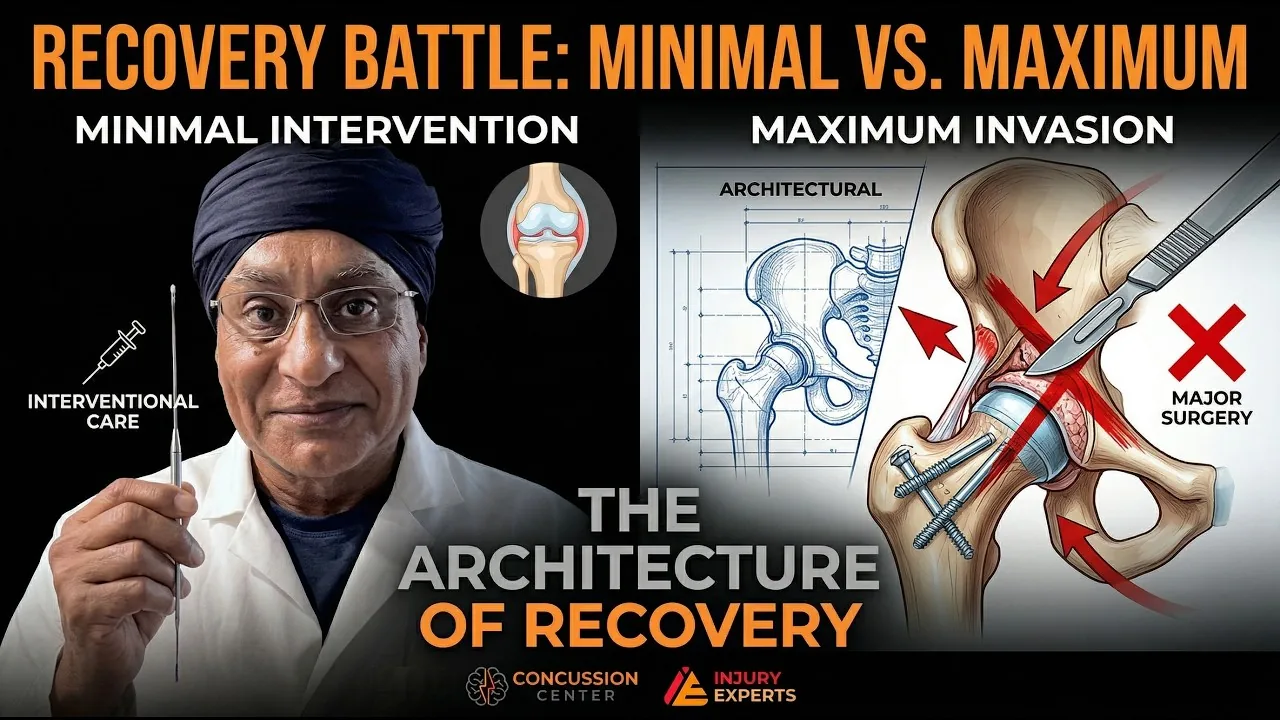
By the time most people arrive with a chronic injury, the choice has narrowed to two extremes: keep doing the conservative management that has already failed, or accept major surgery that feels like a leap into the dark.

Presented that way, it is a poor choice. It is also an incomplete one, because it skips the entire middle of the field — targeted, image-guided interventional procedures that are neither passive nor destructive.

The Architecture of Recovery: Minimal Intervention vs Maximum Invasion — video thumbnail

Watch on YouTube: The Architecture of Recovery: Minimal Intervention vs Maximum Invasion

Why “find the abnormality and remove it” fails so often

The reductionist logic is seductive: locate a structural abnormality on the MRI, cut it out, problem solved. It fails frequently enough to have earned its own diagnosis — failed back surgery syndrome, in which the structural target is successfully corrected and the patient remains in pain.

Part of the reason is that the abnormality on the film is not always the thing generating the pain; asymptomatic findings are common. The other part is biochemical. Major surgery is a substantial metabolic stressor. Performed on someone already carrying high systemic inflammation — elevated TNF-α, IL-6, IL-1β — it asks tissue that is struggling to maintain itself to also perform a large repair. Why the terrain governs the outcome

The diagnostic block as an audit, not a painkiller

The single most underused tool in this field is the diagnostic nerve block, and its value is not the relief it provides.

By temporarily silencing a specific nerve or joint, a block tests a hypothesis: is this the structure carrying the signal? If the pain reliably disappears and returns as the anesthetic wears off, the circuit has been identified. If it does not, an expensive and irreversible assumption has just been disproved cheaply.

This is why it belongs before any permanent intervention. Confirm the signal, then commit.

Two workhorse procedures

Epidural steroid injection (ESI). With a herniated disc, pain is rarely pure mechanical pressure. Disc material provokes a chemical inflammatory cascade around the nerve root, and much of the pain is that chemistry rather than the compression itself. An ESI is best understood as a targeted anti-inflammatory intervention aimed at that cascade. Recovery from the procedure is measured in hours.

Honest framing: epidural steroid injections generally produce meaningful short- to medium-term relief in radicular pain, with benefit that often diminishes over months. They are a means of creating a window in which rehabilitation can happen — not a permanent cure.

Radiofrequency ablation (RFA). For facet-mediated joint pain, RFA uses thermal energy to interrupt the small medial branch nerves carrying the pain signal. The relevant contrast with fusion is structural: RFA stops the signal without removing or immobilizing the joint. Mobility is preserved, which matters because movement is one of the few durable levers on metabolic health. Nerves regenerate, so the effect is durable rather than permanent, and the procedure can be repeated.

Both are used with fluoroscopic or high-resolution ultrasound guidance for precise placement, and can be performed without routine sedation — which has a practical advantage, since an awake patient can report sensory and motor responses in real time.

Complex regional pain syndrome

CRPS deserves separate mention because it is so often mishandled. Diagnosis should follow the Budapest criteria, the accepted standard.

The essential point is that in established CRPS the problem has become centralized — the nervous system has lost normal self-regulation. This is why amputation of an affected limb rarely resolves CRPS: removing the periphery does not address a centrally maintained pain state. Treatment has to target the nervous system, not only the painful part.

The opioid trap

Long-term opioid therapy can produce opioid-induced hyperalgesia, in which the pain system becomes more sensitive over time, while the body’s endogenous relief mechanisms are downregulated. The result is a patient on escalating doses experiencing worsening pain — a well-described phenomenon, and one of the strongest arguments for targeted intervention over indefinite medication.

Never adjust or stop opioid medication on your own; withdrawal carries real risks and requires physician supervision.

What decides whether any of this works

A procedure is only as good as the body it is performed on. Where insulin resistance and systemic inflammation are present, a well-placed injection is still working against the environment it sits in. Measuring the biological terrain — markers such as hs-CRP, TNF-α, and lipid particle measures — is therefore not an adjunct to the procedure; it is what determines whether the procedure holds.

A note on what this article does not cover. The source video describes a peptide-based protocol and specific regulatory classifications. Those claims are deliberately excluded here. Most substances in that category are not FDA-approved for these uses, their regulatory and compounding status is contested and changes, and efficacy for injury recovery is not established to the standard this site holds. Anything of that kind belongs in an individual conversation with your physician, with an honest account of the evidence.

Where a biologic injection fits alongside these procedures is now a written question rather than an open one — the societies graded it between 2024 and 2026. What those guidelines say, and where the evidence runs against them.

Frequently asked questions

What are the alternatives to back surgery?

Image-guided interventional options include diagnostic nerve blocks to identify the pain generator, epidural steroid injections for inflammatory radicular pain, and radiofrequency ablation for facet-mediated pain — alongside rehabilitation and management of the underlying metabolic drivers.

What is failed back surgery syndrome?

Persistent or recurrent pain after technically successful spinal surgery. It occurs partly because the structural finding was not the true pain generator, and partly because the biological environment did not support healing.

How long does radiofrequency ablation last?

Relief is typically durable for months rather than permanent, because the treated nerves regenerate over time. The procedure can generally be repeated. Individual results vary.

Is an epidural steroid injection a cure?

No. It is best understood as targeted anti-inflammatory treatment that reduces radicular pain for a period, creating an opportunity for rehabilitation. Benefit commonly diminishes over months.

Why would a procedure be done without sedation?

Staying awake allows real-time sensory and motor feedback during needle placement, which supports accuracy. Sedation is used when clinically appropriate; this is a discussion to have with your physician.

Where is Injury Experts located?

Injury Experts is at 4477 Woodson Rd, Suite 202, St. Louis, MO 63134, next to Lambert International Airport, serving the St. Louis region in Missouri and Illinois. Call (314) 887-5866 or text (314) 886-5902.

Get your injury validated by science, not by an adjuster's spreadsheet

We turn subjective pain into objective, court-ready evidence — biomarkers, biomechanics and diagnostic blocks. Bring us your case before the insurer defines it for you.

Schedule a Consultation

Or call (314) 887-5866 · text (314) 886-5902

Key takeaways

  • Between failed conservative care and major surgery sits targeted interventional treatment.
  • A diagnostic block confirms the pain generator before anything irreversible.
  • RFA interrupts the signal while preserving joint structure and mobility.
  • CRPS is centrally maintained — the Budapest criteria guide diagnosis, and amputation does not resolve it.
  • Opioid-induced hyperalgesia can make long-term opioid therapy counterproductive.

Medically reviewed by Gurpreet Singh Padda, MD, MBA, MHP — Board Certified in Anesthesiology, Pain Medicine, Interventional Pain Management, Addiction Medicine, and Obesity Medicine.

This article is for general education and is not medical advice. It does not create a physician–patient relationship. Do not start, stop, or change any medication — including opioid medication — without consulting your physician.

Most people injured in a collision do not think about testing for days. They go home, wait to feel better, and start looking for answers only when the fog does not lift.

By then some of the best evidence has already gone. Not because anyone disbelieved them — because certain markers physically clear from the blood on a schedule, and that schedule does not wait for anyone to decide the symptoms are serious enough.

Proving the Invisible & Architecting Regeneration — video thumbnail

Watch on YouTube: Proving the Invisible & Architecting Regeneration

Structural damage versus functional impairment

CT and MRI answer one question well: is there a fracture or a bleed? Mild traumatic brain injury is primarily a microscopic event — axonal shearing and a metabolic mismatch in which injured tissue cannot get the energy it needs to repair. Standard neuroimaging is not built to detect that.

This gap is where claims are denied: if it is not on the scan, it is not real. Two categories of testing close the gap.

The blood markers, and their windows

Since 2018, blood biomarkers have made cellular distress measurable. Two matter most acutely, and their timing differs in a way that changes what you should do:

Marker Source Rises Peak Useful window
UCH-L1 neuronal cell bodies rapidly ~8 hours declines rapidly over ~48 hours
GFAP astrocytes (glial) rapidly ~20 hours declines slowly over ~72 hours; performs across 7 days

The practical consequence is stark. UCH-L1 is a hyperacute signal — wait two days and the window has closed. GFAP is the more forgiving marker and remains useful for people who seek care later in the week.

The combined GFAP/UCH-L1 panel is used chiefly as a rule-out, and here the evidence is strong. The ALERT-TBI study (Bazarian et al., The Lancet Neurology, 2018) reported sensitivity of 0.976 and a negative predictive value of 0.996 for traumatic intracranial abnormalities on CT. The authors estimated that routine use could reduce CT scans by roughly a third.

Read that correctly, because it is often misread. A very high negative predictive value means a negative result is strong evidence against the injury being screened for. It does not mean a positive result proves a specific diagnosis or predicts your recovery.

Point-of-care platforms can return these results within roughly fifteen minutes, which is what makes them useful for an immediate decision about whether a radiation-heavy CT is warranted at all.

Verified against primary sources. The timing figures come from Papa et al., JAMA Neurology (2016); the 0.996 negative predictive value from Bazarian et al., The Lancet Neurology (2018). Note that GFAP’s measured peak is ~20 hours, not the 24 often quoted.

Longer-horizon and rule-out markers

Neurofilament light (NfL) persists for months and speaks to ongoing axonal degeneration rather than the acute event.

S100B is used in European practice — notably the Scandinavian guidelines — as a rule-out to avoid unnecessary imaging, at a serum cutoff of 0.1 µg/L. One correction is worth making here, because it changes what the test means: the 98% figure often quoted for S100B is the negative predictive value, not the sensitivity. Reported sensitivity for intracranial lesions is closer to 90%, and specificity is low — roughly 30–50%. In other words, a normal S100B is reassuring; an elevated one is not, on its own, diagnostic of much.

Beyond the acute phase, TBI behaves as a chronic inflammatory process. Alarmins such as HMGB1 can trigger secondary injury cascades, and persistent neuroinflammation is driven by sustained activation of microglia and astrocytes. This is the mechanistic reason symptoms can continue long after the initial event — and why the inflammatory terrain is worth measuring. More on that terrain

Advanced imaging when the standard scan is silent

Diffusion tensor imaging (DTI) assesses the integrity of white-matter tracts by measuring how water diffuses along them; fractional anisotropy is the metric most often reported. It can identify disruption where conventional MRI shows nothing.

The video states that around 30% of patients with a normal CT show lesions when more sensitive MRI or DTI sequences are used. Confirm this figure and its source population before citing it — the proportion varies considerably by cohort and sequence.

Testing what the brain actually does

Imaging and blood describe structure and chemistry. Neurocognitive testing measures performance, which is often what the person actually lost.

  • SAC (Standardized Assessment of Concussion) — immediate data on orientation and memory.
  • SCAT — a structured assessment covering symptom burden, balance and coordination.
  • Computerized testing (e.g. ImPACT) — processing speed and reaction time measured against normative data, sensitive to deviations a person could not reliably fake in either direction.

Emerging work in cortical physiology — sensorimotor peak alpha frequency and cortical motor excitability measured via EEG and TMS — is being studied as a way to predict who will transition from acute to chronic pain. This is an active research area; the video attributes it to a 2025 JAMA publication, which must be confirmed before citation. Treat predictive claims here as investigational.

Two myths worth retiring

“You must lose consciousness to have a concussion.” This is false. Loss of consciousness occurs in a minority of concussions and is not required for the diagnosis.

“If you felt fine that day, you were fine.” Symptoms including nausea, tinnitus, headache and cognitive fog can emerge over the following days. Delayed onset is common and is not evidence that the symptoms are unrelated.

On treatment claims

The video describes a peptide-based protocol organized into categories, and references changes in the regulatory status of a number of peptides.

We are deliberately not restating those claims here. Peptide therapies in this setting are investigational; regulatory status is in flux and varies by substance and by route of supply; and efficacy claims for brain-injury recovery are not established by the standard of evidence this article holds itself to. Anything in this category should be discussed individually with a physician, with a frank account of what is known, what is not, and what it costs.

Do not start, stop, or change any medication, supplement, or peptide without consulting your physician.

Frequently asked questions

How soon do I need a concussion blood test?

As soon as practical. UCH-L1 peaks around 8 hours and typically clears within about 48 hours, so the window for that marker is short. GFAP peaks near 20 hours and performs consistently across about seven days.

Is it too late if I was injured a week ago?

The acute blood markers may no longer be informative, but that does not end the matter. Advanced imaging, neurocognitive testing, longer-horizon markers such as NfL, and documented functional loss all remain available.

Do I need to have lost consciousness?

No. Loss of consciousness is not required for a concussion diagnosis and occurs in only a minority of cases.

What does a negative predictive value of 99.6% mean?

It means that among people who test negative, the condition being screened for is very rarely present — so a negative result is strong reassurance. It does not mean a positive result proves a specific injury; positives require clinical interpretation.

Are these tests covered by insurance?

Frequently not, despite FDA clearance for some of them. Coverage decisions are made separately from regulatory clearance, so ask about cost in advance.

Where is Injury Experts located?

Injury Experts is at 4477 Woodson Rd, Suite 202, St. Louis, MO 63134, next to Lambert International Airport, serving the St. Louis region in Missouri and Illinois. Call (314) 887-5866 or text (314) 886-5902.

Get your injury validated by science, not by an adjuster's spreadsheet

We turn subjective pain into objective, court-ready evidence — biomarkers, biomechanics and diagnostic blocks. Bring us your case before the insurer defines it for you.

Schedule a Consultation

Or call (314) 887-5866 · text (314) 886-5902

Key takeaways

  • UCH-L1 clears in roughly 48 hours; GFAP remains detectable up to about a week.
  • The GFAP/UCH-L1 panel is primarily a rule-out, not a positive diagnosis.
  • DTI can show white-matter disruption when conventional MRI is silent.
  • Neurocognitive testing measures performance against normative data.
  • Loss of consciousness is not required, and symptom onset is often delayed.

Medically reviewed by Gurpreet Singh Padda, MD, MBA, MHP — Board Certified in Anesthesiology, Pain Medicine, Interventional Pain Management, Addiction Medicine, and Obesity Medicine.

This article is for general education and is not medical advice. It does not create a physician–patient relationship. Do not start, stop, or change any medication, supplement, or peptide without consulting your physician. After a head injury, seek emergency care immediately for worsening headache, repeated vomiting, seizures, weakness, or increasing confusion.

If you have an injury claim, you will hear it. Somewhere in your history there is a note — a bad back at twenty-four, a disc bulge seen incidentally, a shoulder that ached one winter — and it will be produced as proof that the collision changed nothing.

The record request is not neutral curiosity. It is a search for any prior mention that lets your current condition be attributed elsewhere. And the argument only works if nobody examines the biology.

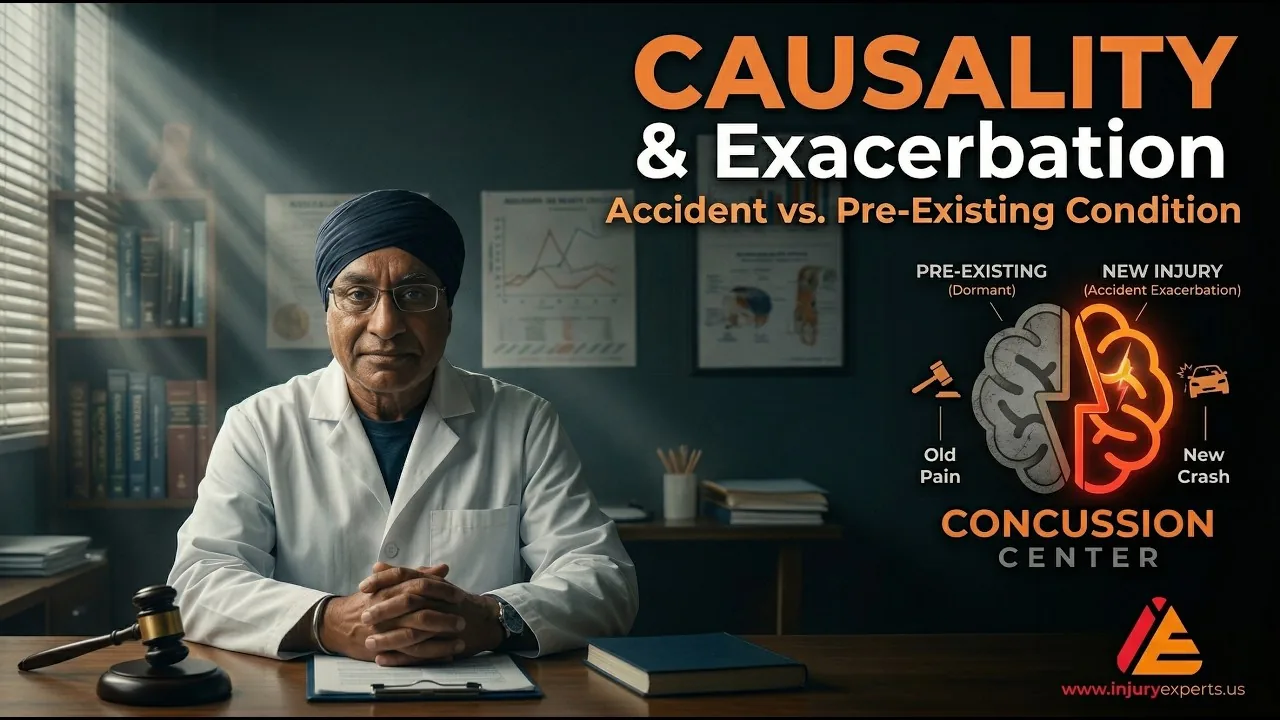
Proving Causality and The Science of Exacerbation — video thumbnail

Watch on YouTube: Proving Causality and The Science of Exacerbation

A finding is not a condition

Here is the distinction the argument depends on eliding.

Imaging findings are extremely common in people with no symptoms at all. A disc bulge visible on a scan, in someone with full function and no pain, describes a stable system. It is a finding, not a disease. It was not limiting you, it was not being treated, and it was not going to be — until something changed.

The relevant question is therefore not did anything exist before? It is what state was the system in, and what changed it? A stable system that becomes an unstable one has undergone an event. That transition is the injury.

The physics the argument ignores

Energy is conserved. In a collision it goes somewhere.

When a vehicle frame crumples, it is absorbing kinetic energy — that is what crumple zones are engineered to do. When a frame does not deform, that energy has not disappeared. It has been transferred, and the occupant is what it was transferred into.

This is why low property damage is such a weak proxy for occupant injury, and why the inference “the car looks fine, so you are fine” is not a medical judgment at all. Rapid acceleration and deceleration can produce axonal shearing — the microscopic stretching and tearing of the brain’s long connecting fibers.

You do not need to strike your head to sustain a traumatic brain injury. The acceleration alone is sufficient, and what follows is a metabolic crisis in which the energy available to injured neural tissue cannot meet the demand of repair.

The biology of exacerbation

Trauma triggers a systemic cytokine cascade — TNF-α, IL-6 and IL-1β prominently among them. Sustained, this drives neuroinflammation and can establish central sensitization: a state in which the nervous system itself remains hyperactive and amplifies pain signals long after the tissue damage has settled.

That last clause is the crux of the exacerbation argument. The metal gets repaired. The nervous system does not necessarily return to its prior setting. A person who was asymptomatic with an incidental finding, and who is now symptomatic with a sensitized nervous system, is not the same physiological system with an older complaint. Something happened.

The image often used for this is a match in a gasoline-soaked room. The fuel was present; it was also inert. The match is not incidental just because it was small.

Documenting it

Two things convert this from argument to evidence.

Objective inflammatory markers. Documenting the cytokine signaling associated with the injury demonstrates a physiological response, not a recollection of one.

Functional failure rather than pain scores. “My back hurts” invites discounting. “I cannot sleep more than three hours” is a measurable failure of function with a plausible inflammatory mechanism, and it is far harder to attribute to a disc bulge that was silent for a decade. How to document this before an examination

A note on rigor: the inference from an elevated marker to a specific legal causation conclusion is not automatic, and a competent opposing expert will probe it. Inflammatory markers are non-specific — they rise for many reasons. Their value is in a pattern assembled alongside mechanism, timeline and function, which is exactly why a single number should never be the whole argument. What a court actually requires

An injured joint also raises the odds of arthritis for decades afterward, which is a different argument from the one the adjuster is making about your imaging. Post-traumatic arthritis, grading scales, and what the knee guidelines say.

Frequently asked questions

Can I claim if I had a prior injury to the same area?

Generally yes — the legal principle is that a defendant takes the plaintiff as found, and aggravation of a pre-existing condition is typically compensable. The medical task is to distinguish your prior baseline from your current state. Your attorney should advise on how this applies in your jurisdiction.

My disc bulge showed on a scan before the accident. Does that end my claim?

Not by itself. Imaging findings are common in people without symptoms. What matters is whether the finding was causing functional limitation before the event, and whether your function and physiology changed after it.

Can I have a brain injury if I never hit my head?

Yes. Axonal shearing results from rapid acceleration and deceleration of the brain within the skull. Direct impact is not required.

Why does the insurer keep requesting more records?

Two reasons usually operate together: the search for any prior mention that supports a pre-existing argument, and delay itself, which increases financial pressure to settle.

What evidence shows an old problem was made worse?

A combination: documented pre-injury function, the mechanism and forces involved, post-injury inflammatory markers, objective findings such as diagnostic blocks, and specific dated functional losses. No single element carries it alone.

Where is Injury Experts located?

Injury Experts is at 4477 Woodson Rd, Suite 202, St. Louis, MO 63134, next to Lambert International Airport, serving the St. Louis region in Missouri and Illinois. Call (314) 887-5866 or text (314) 886-5902.

Get your injury validated by science, not by an adjuster's spreadsheet

We turn subjective pain into objective, court-ready evidence — biomarkers, biomechanics and diagnostic blocks. Bring us your case before the insurer defines it for you.

Schedule a Consultation

Or call (314) 887-5866 · text (314) 886-5902

Key takeaways

  • An asymptomatic imaging finding is a stable system, not a condition.
  • Energy not absorbed by the vehicle is transferred to the occupant.
  • Axonal shearing does not require a head strike.
  • Central sensitization can persist after tissue damage resolves.
  • Inflammatory markers are non-specific — they belong in a pattern, not alone.

Medically reviewed by Gurpreet Singh Padda, MD, MBA, MHP — Board Certified in Anesthesiology, Pain Medicine, Interventional Pain Management, Addiction Medicine, and Obesity Medicine.

This article is for general education and is not medical or legal advice. It does not create a physician–patient or attorney–client relationship. Questions about causation in your specific claim should be directed to your attorney.

If you are genuinely injured, there is a particular dread that sits underneath the whole process: that someone will decide you are making it up.

It is a rational fear, because the accusation does not require evidence. It only requires an absence — a clear scan, a normal reflex exam, a set of complaints that outlast what the pictures show. The label of malingering is then applied to the gap.

The answer to an absence of data is not louder insistence. It is data.

Avoiding the Malingering Label: The Science of Objectivity — video thumbnail

Watch on YouTube: Avoiding the Malingering Label: The Science of Objectivity

Why reporting pain is playing their game

Claims are substantially valued by software. Black-box systems — Colossus most often named — reduce a person to a set of codes, and came with the vendor’s own boast, documented by the Consumer Federation of America, of “up to 20 percent” reduction in bodily injury claims — achieved largely by discounting subjective reports of pain.

Sourced: Consumer Federation of America, Low Ball: An Insider’s Look at How Some Insurers Can Manipulate Computerized Systems (2012). CFA also documented that Allstate’s payout per premium dollar in auto injury cases fell from about 63 cents to 47 cents over a decade. This is the vendor’s and insurer’s own record — not a plaintiff-side estimate.

Read that mechanism carefully, because it tells you what to do. The discount is applied specifically to the subjective. A record consisting of pain ratings is therefore a record built precisely out of the material these systems are designed to devalue.

The counter is not to insist harder. It is to document the why alongside the what — findings that do not depend on anyone’s belief in your sincerity.

The two arguments used against you

The normal MRI. If it is not visible, it is not there. This ignores central sensitization — a state of nervous-system hyperactivity in which pain signals are amplified despite minimal peripheral input. Central sensitization is a well-described phenomenon in the pain literature and it is functional rather than structural. A conventional MRI is not an instrument that can exclude it.

The minor impact soft tissue defense. Low speed, therefore no injury. This is a failure of basic biomechanics. A frame that does not crumple absorbs less energy and transfers more of it to the occupant. The whip of the neck at modest closing speeds is sufficient to produce microscopic shearing of axons — and you do not have to strike your head to sustain a brain injury.

A useful move here: if the defense asserts that the forces were too low to cause injury, that is a quantitative claim, and it can be asked to produce the quantitative basis. G-force estimates and occupant kinematics are calculable. An assertion offered without them is an opinion wearing the costume of physics.

What objective looks like

Diagnostic blocks. A precisely targeted anesthetic block that reliably abolishes a specific pain — and lets it return as the block wears off — is a physiological audit of the circuit. A positive, reproducible response validates the pain source without relying on self-report.

Cytokine signaling. Persistent elevation of TNF-α, IL-6 and IL-1β is associated with the neuroinflammation that keeps pain going after visible injury resolves. The video notes that Mendelian randomization studies support these cytokines as drivers in pain phenotypes rather than mere bystanders — a claim that must be verified against the specific studies before it is published or testified to, since MR findings in this area vary by cytokine and by outcome.

Metabolic terrain. Pre-existing insulin resistance or metabolic syndrome compromises recovery capacity, and high systemic inflammation makes an injury physiologically more severe. The video also cites research reporting that normoglycemic patients with chronic low back pain show significantly higher postprandial glycemic responses. This finding requires citation confirmation before use.

The framing that matters: a patient who recovers slowly because their biological terrain is compromised is not exaggerating. That is a collision of two problems, and it is measurable. More on the terrain

Document function, not adjectives

The single most useful habit is to convert complaints into records.

  • Not “it hurts a lot” → “I cannot sleep more than three hours most nights.”
  • Not “my arm is bad” → “I cannot lift overhead, so I stopped doing the part of my job that requires it, as of the week after the collision.”

Specific, dated, functional. That is what survives a skeptical reader.

Turning the audit around

One more thing is worth knowing: the black box can be questioned. It is legitimate to ask what software was used to value the claim and what injury codes were assigned. Whether that request succeeds depends on jurisdiction, posture and your attorney’s judgment — but the asymmetry of scrutiny is worth naming. Your records are examined exhaustively. The model that prices them is usually not examined at all.

Frequently asked questions

What does malingering actually mean?

Malingering is the deliberate feigning or gross exaggeration of symptoms for an external incentive. It is a specific accusation, not a synonym for “unexplained.” Symptoms that lack a structural explanation are not, by that fact, fabricated.

That is the subject of The “Independent” Medical Examination Is Not Independent.

How can pain be proven if my MRI is normal?

Through findings that do not depend on imaging: a reproducible response to a diagnostic block, objective inflammatory markers, documented functional loss, and biomechanical analysis of the forces involved.

“In My Experience” Is No Longer Enough: The Expert Witness After Daubert explains what that looks like.

What is the minor impact soft tissue defense?

The argument that a low-speed collision with little vehicle damage cannot cause significant injury. It misstates the physics — a frame that does not deform transfers more energy to occupants, not less.

This is set out in Your Claim Is Not Being Evaluated. It Is Being Scored..

Can I really ask which software valued my claim?

You can ask. Whether the answer is obtainable depends on jurisdiction and the stage of the case, and it is a question for your attorney rather than your physician.

The detail is in You Are Looking at the Wrong Number.

Does a slow recovery make me look like I am exaggerating?

It should not. Recovery speed varies with metabolic and inflammatory status, and a compromised biological terrain predicts a slower course. Documenting that terrain reframes slow recovery as a measured finding rather than an inconsistency.

There is more on this in “In My Experience” Is No Longer Enough: The Expert Witness After Daubert.

Where is Injury Experts located?

Injury Experts is at 4477 Woodson Rd, Suite 202, St. Louis, MO 63134, next to Lambert International Airport, serving the St. Louis region in Missouri and Illinois. Call (314) 887-5866 or text (314) 886-5902.

That is the subject of The “Independent” Medical Examination Is Not Independent.

Get your injury validated by science, not by an adjuster's spreadsheet

We turn subjective pain into objective, court-ready evidence — biomarkers, biomechanics and diagnostic blocks. Bring us your case before the insurer defines it for you.

Schedule a Consultation

Or call (314) 887-5866 · text (314) 886-5902

Key takeaways

  • Claims software discounts subjective reports specifically — so build an objective record.
  • A normal MRI cannot exclude central sensitization.
  • The minor-impact defense inverts the physics of energy transfer.
  • Diagnostic blocks and inflammatory markers do not depend on being believed.
  • Slow recovery on a compromised metabolic terrain is a finding, not a contradiction.

Medically reviewed by Gurpreet Singh Padda, MD, MBA, MHP — Board Certified in Anesthesiology, Pain Medicine, Interventional Pain Management, Addiction Medicine, and Obesity Medicine.

This article is for general education and is not medical or legal advice. It does not create a physician–patient or attorney–client relationship. Do not start, stop, or change any medication without consulting your physician.

If you are living with a serious injury, the number occupying your attention is almost certainly the next medical bill. That is the number the system wants you focused on, because it is small, immediate, and settleable.

The number that will actually determine the shape of your life is much further out, and nobody sends you an invoice for it.

The Economics of Agony: The Lifetime Cost of Chronic Pain — video thumbnail

Watch on YouTube: The Economics of Agony: The Lifetime Cost of Chronic Pain

Why a brain injury does not have a fixed price

An injury is not a static event that concludes when the tissue closes. A traumatic brain injury sets off a metabolic crisis in which the energy supply available to neural tissue cannot meet the demands of repair. That mismatch does not resolve on the schedule of a claim.

The cost range reflects this. The figures cited in the video are approximately $85,000 as a starting point for a mild TBI, escalating past $3 million for a significant one.

Be careful with this range. We went looking for its origin. The $85,000-to-$3-million span is repeated across a great many legal and advocacy websites, but we could not trace it to a peer-reviewed primary source. It is best treated as a widely circulated illustration of scale, not as a research-grade valuation — and it should never be presented to a court without a defensible source behind it. In a specific case, the number that matters is a life care plan built on that person’s actual projected needs.

The gap between those numbers is not mostly about surgery. It is about decades of care, lost earnings, and secondary consequences that accumulate.

The long-term neurological risk

Traumatic brain injury is an established risk factor for later neurodegenerative disease, including Alzheimer’s disease and Parkinson’s disease. This association is well documented in the epidemiological literature.

Two cautions matter, and they cut against overstatement. Risk is not destiny — most people who sustain a TBI will not develop these conditions, and the size of the increase varies substantially with injury severity, frequency and the population studied. The mechanisms remain an area of active research rather than settled science. Any presentation of a head injury as a guaranteed path to dementia is not supported by the evidence and should be treated with suspicion, including in a courtroom.

Chronic pain as a thief of time value

In finance, a dollar today is worth more than a dollar tomorrow. For someone living with a disabling injury, that logic inverts in a punishing way.

Diminished earning capacity is not simply this year’s missed salary. It is the promotion not received, the contributions not made, the compounding that does not happen — and, ultimately, the wealth that does not pass to the next generation. Settling against today’s bills converts a multi-decade loss into a single payment calculated on the wrong horizon.

This is measurable. Malhotra and colleagues (JAMA Surgery, 2024) linked hospitalization and taxation records for 18,050 patients and tracked employment and personal income for three years after traumatic brain injury. Income and employment losses were significant and persisted into years two and three — and the authors noted that the losses following mild injuries, which made up most of the cohort, were larger than expected.

Two honest qualifications: it is a Canadian study, so the labor market and income figures do not transfer directly to a US claim, and three years is the study window rather than the duration of the problem.

How you are actually valued

Injury claims are substantially scored by software. Black-box algorithms — most commonly Colossus — reduce a person to a set of codes. The vendor’s own sales literature, documented by the Consumer Federation of America, boasted that it would “immediately reduce the size of bodily injury claims by up to 20 percent” — largely by discounting subjective reports of pain.

Sourced: Consumer Federation of America, Low Ball: An Insider’s Look at How Some Insurers Can Manipulate Computerized Systems (2012). CFA also documented that Allstate’s payout per premium dollar in auto injury cases fell from about 63 cents to 47 cents over a decade. This is the vendor’s and insurer’s own record — not a plaintiff-side estimate.

The mechanism to understand is that these systems punish thin documentation. They also rely on time: delay is a lever, and a claimant whose savings are exhausted becomes far more willing to accept a low offer.

Three ways to answer with data

1 · Metabolic analysis. Document the biological terrain. Elevated systemic inflammation — TNF-α, IL-6, high-sensitivity CRP — describes a physiologically more severe injury and a slower expected recovery, in a form that does not depend on self-report. The mechanism

2 · Diagnostic blocks. A targeted anesthetic block that reliably abolishes a specific pain is a physiological demonstration that the pain circuit exists and can be localized — objective evidence rather than testimony. Why this survives scrutiny

3 · Life care planning. The future is calculated rather than guessed: the projected course of care, accounting for secondary complications from neuroinflammation through metabolic decline, expressed as a defensible schedule of need rather than an assertion that things will probably be bad.

Frequently asked questions

What does a traumatic brain injury cost over a lifetime?

Published estimates range enormously with severity — from roughly $85,000 for mild injury to several million dollars for severe injury. These estimates vary by methodology and study year, so any figure used in a specific case should be sourced and defended rather than quoted generically.

That is the subject of The Injury You Can Photograph Is the Smaller Half.

Should I settle my injury claim now?

That is a decision for you and your attorney. Understand that a settlement typically resolves future claims too. If your condition has not stabilized, the future portion is being estimated rather than observed — which is precisely the uncertainty an insurer is better resourced to price than you are.

That is the subject of The Injury You Can Photograph Is the Smaller Half.

Does a brain injury cause Alzheimer’s or Parkinson’s?

TBI is an established risk factor for later neurodegenerative disease, but it is not a cause in the deterministic sense. Most people who sustain a TBI do not go on to develop these conditions, and risk varies with severity and repetition.

The Fear Every Honest Patient Carries goes through it in detail.

What is a life care plan?

A structured projection of the medical care, equipment, therapy and support a person is expected to need over their lifetime as a result of an injury, with associated costs. It converts “he will need ongoing care” into an itemized, examinable schedule.

See Your Claim Is Not Being Evaluated. It Is Being Scored..

Why do insurers delay?

Delay is inexpensive for a large organization and costly for an individual. As personal finances deteriorate, willingness to accept a lower settlement rises. The physiological cost of that pressure is described in the secondary effects of injury.

Where is Injury Experts located?

Injury Experts is at 4477 Woodson Rd, Suite 202, St. Louis, MO 63134, next to Lambert International Airport, serving the St. Louis region in Missouri and Illinois. Call (314) 887-5866 or text (314) 886-5902.

This is set out in The “Independent” Medical Examination Is Not Independent.

Get your injury validated by science, not by an adjuster's spreadsheet

We turn subjective pain into objective, court-ready evidence — biomarkers, biomechanics and diagnostic blocks. Bring us your case before the insurer defines it for you.

Schedule a Consultation

Or call (314) 887-5866 · text (314) 886-5902

Key takeaways

  • A brain injury is a decades-long metabolic event, not a closed episode of care.
  • Published lifetime costs span roughly $85,000 to several million by severity — ranges, not fixed valuations.
  • TBI raises the risk of neurodegenerative disease; it does not guarantee it.
  • Diminished earning capacity compounds and reaches the next generation.
  • Metabolic markers, diagnostic blocks and a life care plan answer an algorithm with data.

Medically reviewed by Gurpreet Singh Padda, MD, MBA, MHP — Board Certified in Anesthesiology, Pain Medicine, Interventional Pain Management, Addiction Medicine, and Obesity Medicine.

This article is for general education and is not medical, legal, or financial advice. It does not create a physician–patient or attorney–client relationship. Decisions about settling a claim should be made with your attorney.
Most of the medical attention after a serious injury goes to the thing that shows up on film — the fracture, the herniated disc, the visible damage. That is reasonable. It is also incomplete, and the incompleteness is expensive.

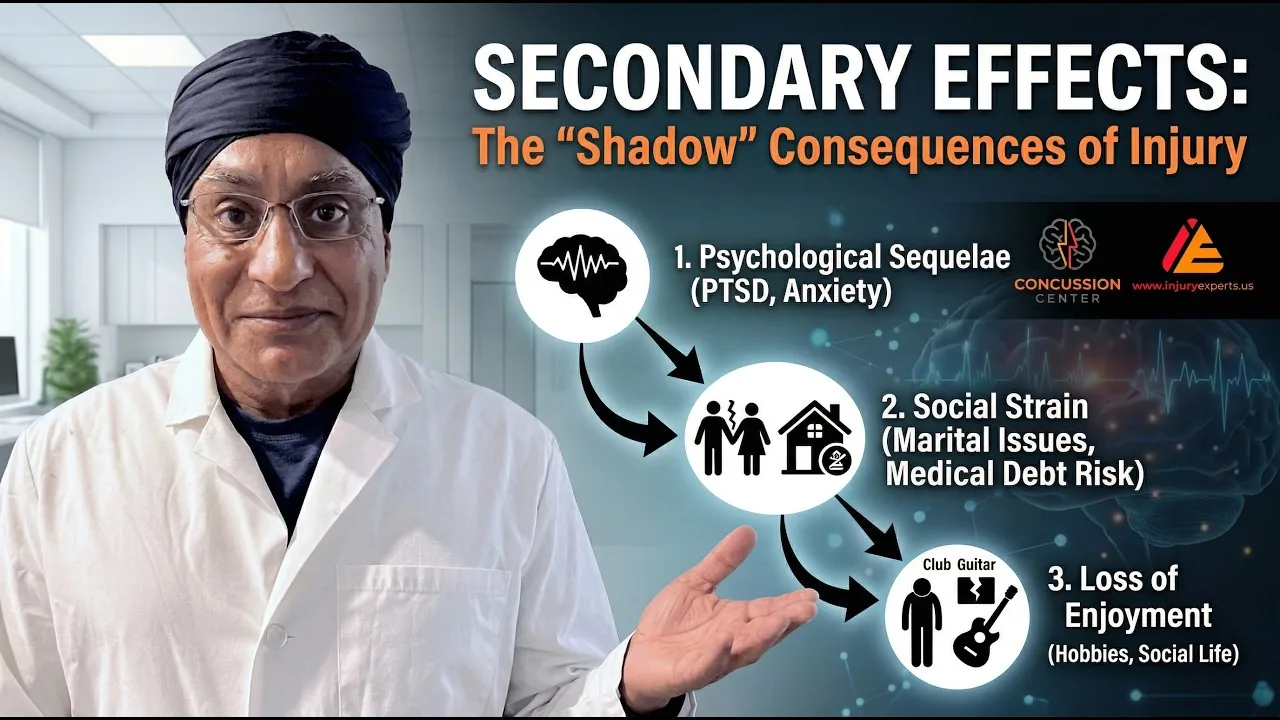
A physical injury is rarely a single event. It is a pivot point, and what follows it is a cascade: sleep that does not restore, a mood that will not settle, work that becomes impossible, a marriage under strain, savings draining toward medical bills. These are routinely dismissed as soft, subjective, or someone else’s specialty. They are none of those things. They are measurable, they are biological, and they change how fast you heal.

Secondary Effects: The Shadow Consequences of Injury — video thumbnail

Watch on YouTube: Secondary Effects: The Shadow Consequences of Injury

PTSD after a collision is not a willpower problem

If you are anxious, hypervigilant, or unable to get back in a car without your chest tightening, you have not failed at coping.

Traumatic stress triggers a systemic release of pro-inflammatory cytokines — the same class of molecules released by the physical injury itself. They behave like chemical gasoline: lowering the pain threshold, sensitizing the nervous system, and keeping the whole system on alert.

This is why the insurance framing — physical injury over here, mental health over there, please file them separately — is biologically incoherent. A distressed mind and an injured body are being fed by the same inflammatory fire. Separating them is an accounting convenience, not a clinical fact.

Functional neurological disorder is not faking

One of the most common fears after an injury is being labeled a malingerer. It is worth being precise: functional neurological disorder is not feigning and it is not malingering. It is a genuine disorder of nervous system function, now recognized as such, and it is diagnosed on positive clinical signs rather than by excluding everything else.

Where symptoms are questioned, objective physical findings answer the question. A diagnostic block — a targeted anesthetic that reliably abolishes a specific pain and lets it return as the block wears off — demonstrates that the pain circuit exists and where it runs. How that becomes evidence

Debt is a physiological event

Medical debt is normally filed under finance. Physiologically, it belongs under stressors.

Sustained financial desperation drives a high-cortisol state, and high cortisol is catabolic — it favors tissue breakdown over repair. A body under continuous economic threat is being instructed, hormonally, not to rebuild.

This has an uncomfortable implication. Delay is not neutral in a claim. When the process is drawn out while bills accumulate, the resulting physiological state works against the very recovery being disputed. The strategy of waiting for a claimant’s resources to run down before making an offer has a biological cost, not only a financial one.

Isolation is a clinical finding

When an injury stops you attending your church, your job, your friendships, the loss registers as more than sadness. Holt-Lunstad and colleagues (Perspectives on Psychological Science, 2015) pooled the literature and found social isolation associated with a 29% increase in mortality risk, loneliness 26%, and living alone 32% — risk the authors concluded exceeds that from obesity.

“Loss of enjoyment of life” is treated by the assembly line as too subjective to count. We treat it as data, because the mechanism is real: withdrawal from social and physical activity degrades sleep, movement and metabolic health, all of which feed back into pain.

The same holds for relationships. Marital and family strain following injury is associated with substantially worse work outcomes — the video cites productivity loss being roughly two-thirds more likely where such strain exists. That specific figure requires citation confirmation before it should be relied on.

What the labor-market data shows

The economic consequences of a significant injury extend well beyond active treatment. Malhotra and colleagues (JAMA Surgery, 2024) linked hospitalization and taxation records for 18,050 patients and followed employment and income for three years after traumatic brain injury. Losses were significant and persisted into years two and three, and — notably — were substantial even after mild injuries, which made up most of the cohort.

This is a Canadian study, so the dollar figures do not transfer to a US claim. The pattern does: settling against this year’s medical bills ignores the compounding value of work you may not return to.

What we do about it

The premise is that the biological soil determines whether anything planted in it survives. An injection into a toxic terrain is a temporary bandage — a point that holds whether or not the injection was technically well performed.

So the work runs in parallel: document the terrain, and repair it. Sleep, movement and nervous system regulation are treated as clinical targets rather than lifestyle advice, alongside the metabolic and inflammatory markers that describe how much capacity for healing you currently have. More on the metabolic side

Frequently asked questions

Are psychological effects part of an injury claim?

They are frequently part of a claim, and they are medically inseparable from the physical injury: traumatic stress and tissue trauma drive overlapping inflammatory responses. Whether and how they are compensable in your case is a legal question for your attorney.

There is more on this in You Did Everything Right and the Pain Stayed. That Is Information..

Is functional neurological disorder the same as malingering?

No. Malingering means deliberately feigning symptoms for gain. Functional neurological disorder is a genuine disorder of how the nervous system functions, diagnosed on positive clinical signs. Conflating the two is a clinical error.

The detail is in You Are Looking at the Wrong Number.

Can financial stress really slow physical healing?

The mechanism is well described: chronic stress sustains elevated cortisol, and high-cortisol states are catabolic, favoring tissue breakdown over repair. Debt and financial insecurity act as chronic stressors in exactly this way.

The detail is in You Did Everything Right and the Pain Stayed. That Is Information..

How do I document loss of enjoyment of life?

Specifically and contemporaneously. Record the activities you have stopped, when you stopped them, and how often you used to do them — work, worship, sport, caregiving, social contact. Dated specifics are far harder to discount than a general statement that life is worse.

See You Are Looking at the Wrong Number.

Should I settle while I am still symptomatic?

That is a decision for you and your attorney, but understand what is being traded: a settlement resolves future claims as well as present bills. If symptoms are unresolved, the future cost is being estimated, not observed.

There is more on this in You Are Looking at the Wrong Number.

Where is Injury Experts located?

Injury Experts is at 4477 Woodson Rd, Suite 202, St. Louis, MO 63134, next to Lambert International Airport, serving the St. Louis region in Missouri and Illinois. Call (314) 887-5866 or text (314) 886-5902.

The mechanism is covered in You Did Everything Right and the Pain Stayed. That Is Information..

Get your injury validated by science, not by an adjuster's spreadsheet

We turn subjective pain into objective, court-ready evidence — biomarkers, biomechanics and diagnostic blocks. Bring us your case before the insurer defines it for you.

Schedule a Consultation

Or call (314) 887-5866 · text (314) 886-5902

Key takeaways

  • Post-injury PTSD and anxiety share an inflammatory mechanism with the physical injury; siloing them is not clinically coherent.
  • Functional neurological disorder is a real diagnosis, not feigning.
  • Financial stress and isolation are physiological stressors that impair repair.
  • Loss of enjoyment of life can be documented as dated, specific functional loss.
  • Repairing the biological terrain determines whether any local treatment holds.

Medically reviewed by Gurpreet Singh Padda, MD, MBA, MHP — Board Certified in Anesthesiology, Pain Medicine, Interventional Pain Management, Addiction Medicine, and Obesity Medicine.

This article is for general education and is not medical or legal advice. It does not create a physician–patient or attorney–client relationship. Do not start, stop, or change any medication without consulting your physician. If you are experiencing thoughts of self-harm, contact the 988 Suicide and Crisis Lifeline by calling or texting 988.

If you have an active injury claim, a letter has probably arrived requesting an independent medical examination. It is worth being precise about what that phrase means, because the word doing the most work in it is the least accurate.

The examination is requested and paid for by the party with a financial interest in the outcome. It is not a second opinion arranged for your benefit. It is a forensic audit of your claim. Understanding that is not cynicism — it is the difference between walking in as a patient and walking in prepared.

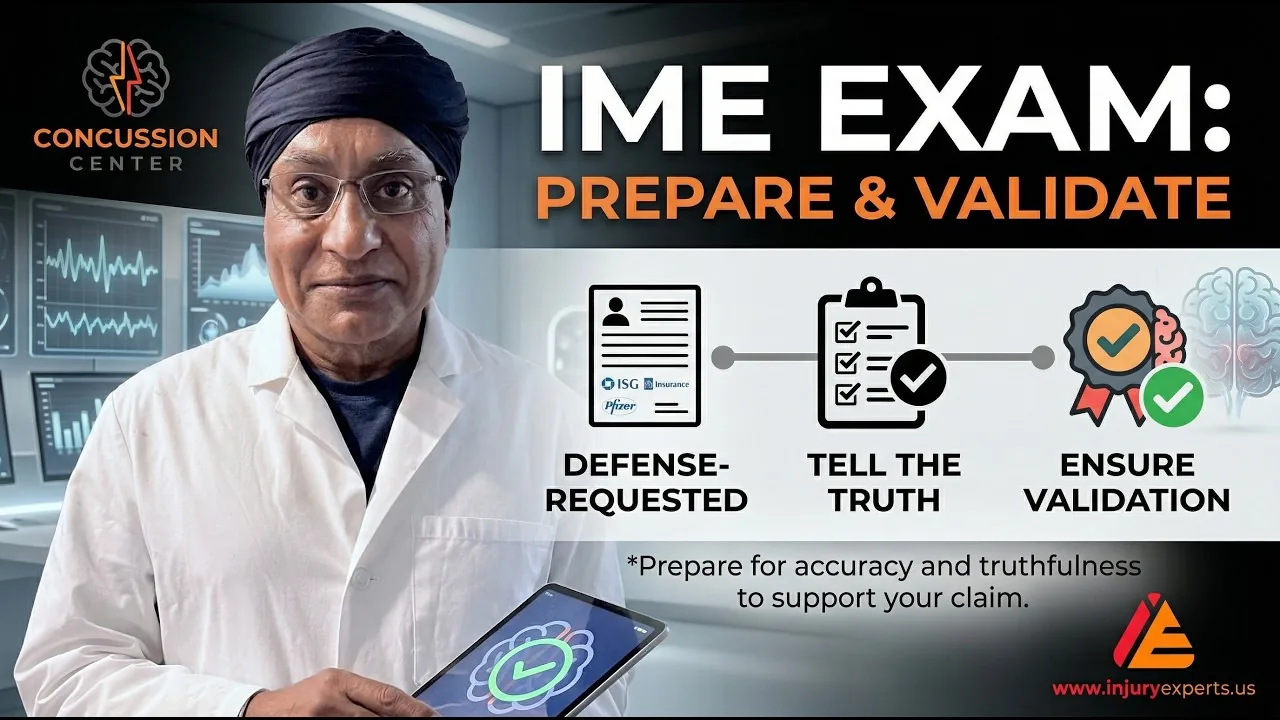
What exactly is an IME — video thumbnail

Watch on YouTube: What exactly is an IME

The economics you are standing inside

Claims are not weighed by a person contemplating your suffering. They are substantially scored by software. Black-box algorithms — Colossus being the most frequently named — came with the vendor’s own boast that the program would “immediately reduce the size of bodily injury claims by up to 20 percent.”

Sourced: Consumer Federation of America, Low Ball: An Insider’s Look at How Some Insurers Can Manipulate Computerized Systems (2012). CFA also documented that Allstate’s payout per premium dollar in auto injury cases fell from about 63 cents to 47 cents over a decade. This is the vendor’s and insurer’s own record — not a plaintiff-side estimate.

What such systems consistently punish is a thin record. This is the single most useful thing to understand before an examination: gaps in documentation are not neutral. They are scored against you.

What the examiner is looking for

In an adversarial setting the examining physician is often oriented toward malingering — the claim that symptoms are exaggerated for financial gain.

We reject that framing as a starting assumption, and not out of sentiment. Pain is a signal rather than a diagnosis; if the examination is not designed to look for the signal, it will not find it, and the absence will be recorded as though it were evidence of absence.

The normal MRI trap

The most common move is to treat clear imaging as proof of no injury. This is scientifically illiterate, and it fails for a specific reason.

Trauma triggers a systemic release of pro-inflammatory cytokines — TNF-α, IL-6 and IL-1β — which lower pain thresholds and sensitize the nervous system. A significant brain or spinal injury is a metabolic event as much as a structural one, a state in which the energy supply to neural tissue cannot meet demand.

Axonal shearing — the stretching and tearing of the brain’s long connecting fibers — occurs during high kinetic-energy transfer, including in low-speed collisions where the vehicle frame did not visibly deform. A brief examination cannot quantify it, and neither can a conventional scan. That does not make it absent. More on why conventional imaging misses this

Diagnostic error is also more common than the confident tone of these reports suggests. A systematic review of 53 autopsy series by Shojania and colleagues (JAMA, 2003) found a median major diagnostic error rate of 23.5% — errors that, had they been known, would have affected treatment.

One caveat belongs with that number, and it cuts against overuse: the same review found major errors declining by roughly 19% per decade. A 2003 figure describes an era, not today’s emergency department.

Preparing: stop being a patient, start being the custodian of your data

Three things change outcomes.

1 · Absolute consistency. The examiner is looking for friction between your accounts — the difference between what you told the emergency department, your treating physician, and the examiner. Inconsistency is read as unreliability even when it is just ordinary human imprecision. Say the same true thing every time.

2 · Document functional failure, not just pain. “It hurts” is subjective and easy to discount. Function is data.

  • Weak: “My shoulder hurts a lot.”
  • Strong: “I cannot lift my arm above shoulder height, so I have not been able to reach the top shelf at work since the collision.”
  • Weak: “I don’t sleep well.”
  • Strong: “I wake after about three hours and cannot get back to sleep; this has happened most nights since the injury.”

Describe what you can no longer do, how often, and since when. That converts a complaint into a record.

3 · Understand what a diagnostic block proves. IME range-of-motion testing is often rudimentary. A targeted diagnostic block is different in kind: if a precisely placed anesthetic reliably abolishes the pain and it returns as the block wears off, that is a physiological demonstration that the pain circuit exists and can be localized. It does not depend on anyone believing you. How this becomes admissible evidence

Why some people do not recover on schedule

There is an honest limitation in the standard model. A large majority of US adults are metabolically dysfunctional — the video cites roughly 12% as metabolically healthy, consistent with NHANES 2009–2016 analyses that put it under 12.2%; on the tighter criteria applied after 2021 the figure is under 7%.

If you are in that majority, injury tends to stick to you longer, because the biological terrain is inflamed before the trauma ever occurs. This is not a character failure and it is not evidence of exaggeration. It is a measurable difference in healing capacity that an examination lasting a few minutes is not designed to detect.

Frequently asked questions

Is an IME really independent?

The examination is requested and paid for by the insurer or defense. It is a forensic evaluation of your claim rather than treatment arranged on your behalf. Being clear-eyed about that is not a reason to be hostile — it is a reason to be well documented.

This is set out in The Fear Every Honest Patient Carries.

What should I say at an IME?

The truth, stated consistently. Describe specific functional limitations — what you cannot do, how often, and since when — rather than only rating pain. Avoid both minimizing and overstating; consistency across all your medical accounts matters more than emphasis.

That is the subject of “In My Experience” Is No Longer Enough: The Expert Witness After Daubert.

What happens if they accuse me of malingering?

A malingering opinion is an opinion, and it is answerable with objective evidence: diagnostic blocks, inflammatory markers, biomechanical analysis and documented functional loss. That is precisely why building an objective record before the examination matters.

This is set out in The Fear Every Honest Patient Carries.

Can I be injured if the car barely looked damaged?

Yes. When a vehicle structure does not deform, the collision’s kinetic energy is transferred rather than absorbed. Axonal shearing is described in low-speed collisions where property damage was minimal.

This is set out in You Are Looking at the Wrong Number.

Do I have to attend the IME?

Attendance is usually required under the terms of your claim or policy, and the rules vary by state and case posture. Ask your attorney before declining or rescheduling — this article is not legal advice.

“In My Experience” Is No Longer Enough: The Expert Witness After Daubert goes through it in detail.

Where is Injury Experts located?

Injury Experts is at 4477 Woodson Rd, Suite 202, St. Louis, MO 63134, next to Lambert International Airport, serving the St. Louis region in Missouri and Illinois. Call (314) 887-5866 or text (314) 886-5902.

The mechanism is covered in You Are Looking at the Wrong Number.

Get your injury validated by science, not by an adjuster's spreadsheet

We turn subjective pain into objective, court-ready evidence — biomarkers, biomechanics and diagnostic blocks. Bring us your case before the insurer defines it for you.

Schedule a Consultation

Or call (314) 887-5866 · text (314) 886-5902

Key takeaways

  • An IME is a forensic audit requested by the opposing party, not a second opinion.
  • Claims software penalizes thin records; documentation density is protective.
  • Clear imaging does not exclude inflammatory or axonal injury.
  • Describe functional loss with specifics — frequency, limit, and start date.
  • A positive diagnostic block is objective evidence independent of self-report.

Medically reviewed by Gurpreet Singh Padda, MD, MBA, MHP — Board Certified in Anesthesiology, Pain Medicine, Interventional Pain Management, Addiction Medicine, and Obesity Medicine.

This article is for general education and is not medical or legal advice. It does not create a physician–patient or attorney–client relationship. Consult your attorney about obligations relating to your claim, and do not start, stop, or change any medication without consulting your physician.

You went to the appointments. You did the physical therapy. You took the medication you did not want to take, and you took it as prescribed. The pain came back anyway.

The usual explanation offered at that point is that you must not have tried hard enough, or that this is simply your life now. Both are wrong, and both are convenient. There is a third explanation that almost nobody checks: the treatment was applied to tissue that was in no biological condition to heal.

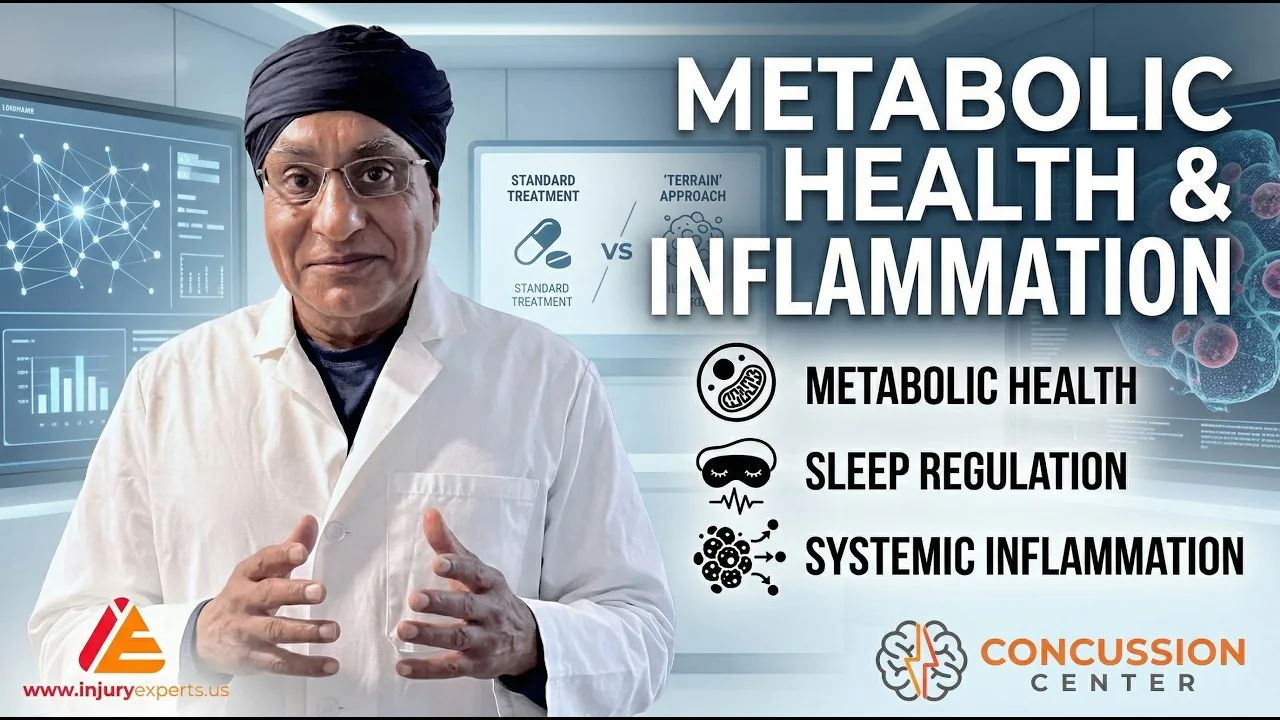
Why Your Pain Doesn't Heal: Metabolic Terrain — video thumbnail

Watch on YouTube: Why Your Pain Doesn't Heal: Metabolic Terrain

Pain is a signal, not a diagnosis

The assembly-line model treats pain as the thing to be eliminated. But pain behaves much more like a check-engine light: it is the output of a system reporting that something upstream has gone wrong. Silence the light and you have changed nothing about the engine.

This distinction is not philosophical. It determines what you measure.

The furnace nobody looks at

Visceral fat is not inert storage. In a metabolically dysfunctional state it behaves as an active endocrine organ: white adipose tissue recruits immune cells that secrete pro-inflammatory cytokines, prominently tumor necrosis factor alpha (TNF-α) and interleukin-6 (IL-6).

When those markers stay chronically elevated, they drive neuroinflammation and contribute to central sensitization — a state in which the nervous system amplifies incoming signals, so light touch or ordinary movement begins to register as injury.

The practical consequence is blunt. If the systemic inflammatory fire is not brought down, the tissue is too inflamed to heal, and any local repair you attempt is working against the environment it sits in.

What the data says about “unexplained” pain

Fibromyalgia and insulin resistance. Pappolla and colleagues, writing in PLOS ONE in 2019, found that fibromyalgia patients separated from control populations by HbA1c — a surrogate marker of insulin resistance — once age was accounted for. A subgroup with pre-diabetic or diabetic HbA1c who were treated with metformin showed marked improvement in widespread pain.

Read that carefully, because the framing matters. The paper is explicitly titled a preliminary report, and it studied 23 patients. It is a hypothesis worth taking seriously, not a settled prevalence figure. In particular, the “79% of fibromyalgia patients show insulin resistance” number that circulates in discussions of this work — including in the source video — does not appear in that paper, and we have not been able to source it. It is therefore not stated as fact here.

Leptin. Leptin is usually described as the satiety hormone. In a metabolically disordered body it also appears to act as a pro-nociceptive signal — one that promotes pain. Younger and colleagues (Journal of Women’s Health, 2016) tracked daily serum leptin against daily self-reported pain and found leptin predicted roughly 49% of the pain variance. In osteoarthritis, higher leptin in joint fluid is associated with the matrix-degrading enzymes that break down cartilage.

The leptin finding rests on a very small study. That daily-tracking arm followed three women. A correlation that strong in three people is a reason to investigate, not a reason to conclude. Anyone citing “leptin explains half of fibromyalgia pain” without saying n=3 is overstating it.

Against that background, treating the problem with a steroid injection or an opioid alone is, again, silencing the smoke alarm while the house burns.

Sleep, cortisol and the repair window

Tissue repair is not a daytime activity. Without restorative sleep — roughly seven to eight hours — morning cortisol tends to remain elevated. A persistently high-cortisol environment is catabolic: it favors breakdown over rebuilding. Sleep disruption is also associated with higher systemic CRP and IL-6.

A rehabilitation plan that ignores sleep is asking the body to rebuild during the only hours it has been told to tear down.

The part of medicine that is not biology

Social circumstance is not a soft factor bolted onto the clinical picture; it is a biological input. Financial strain and loneliness function as chronic stressors, keeping the system in a state of high alert that works directly against the down-regulation of pain signaling. The meta-analysis by Holt-Lunstad and colleagues (Perspectives on Psychological Science, 2015) found social isolation associated with a 29% increase in mortality risk, loneliness 26%, and living alone 32% — and concluded the risk from lacking social relationships exceeds that from obesity.

In our own practice, the overwhelming majority of patients carry at least one significant social determinant of this kind. That is a practice-reported observation from our patient population, not a published statistic, and individual results vary.

What we do instead

We start with a physiological audit rather than a procedure schedule: markers such as high-sensitivity CRP and LDL particle number, alongside the metabolic picture, to establish what condition the terrain is actually in.

Where it is indicated, metabolic medical management — including insulin sensitizers — is used to lower the inflammatory load before or alongside interventional treatment. The use of insulin-sensitizing medication specifically to reduce pain is investigational rather than an established indication. Do not start, stop, or change any medication without consulting your physician.

There is also a reason to sequence care this way. Interventional procedures have been reported to deliver poorer relief in patients with elevated inflammatory markers. If that holds, then fixing the terrain is not an alternative to the procedure — it is what makes the procedure work.

The same terrain decides what an orthobiologic injection can do, because the injectate is manufactured from your own blood. Why the terrain is measured before anything is injected.

Frequently asked questions

Why did my injections stop working?

One under-examined possibility is the biological environment. Elevated systemic inflammation is associated with poorer response to interventional pain procedures. A local treatment delivered into a persistently inflamed system has to fight that background, and the benefit often fades faster.

The Injection Is Made From You. That Is the Whole Problem. goes through it in detail.

What does insulin resistance have to do with pain?

Metabolic dysfunction promotes chronic low-grade inflammation, which drives neuroinflammation and central sensitization — a lowered threshold at which the nervous system reports pain. Research has also found high rates of insulin resistance in fibromyalgia patients, though causation is not established.

See The Injection Is Made From You. That Is the Whole Problem..

Does poor sleep really make pain worse?

Yes, and the mechanism is plausible: insufficient restorative sleep is associated with elevated cortisol and higher inflammatory markers including CRP and IL-6. Cortisol-dominant states favor tissue breakdown over repair.

See The Injury You Can Photograph Is the Smaller Half.

Is this saying my pain is caused by my weight?

No. It is saying that metabolic inflammation — which is not the same thing as body size, and which occurs in people of all builds — changes how tissue heals and how the nervous system processes signals. The target is the inflammatory state, not appearance.

The detail is in The Injury You Can Photograph Is the Smaller Half.

What tests would tell me if this applies to me?

A metabolic and inflammatory panel is the starting point: high-sensitivity CRP, markers of insulin resistance, and lipid particle measures, interpreted alongside your sleep, history and clinical exam. No single value is decisive.

The mechanism is covered in The Injection Is Made From You. That Is the Whole Problem..

Where is Injury Experts located?

Injury Experts is at 4477 Woodson Rd, Suite 202, St. Louis, MO 63134, next to Lambert International Airport, serving the St. Louis region in Missouri and Illinois. Call (314) 887-5866 or text (314) 886-5902.

The Injury You Can Photograph Is the Smaller Half goes through it in detail.

Get your injury validated by science, not by an adjuster's spreadsheet

We turn subjective pain into objective, court-ready evidence — biomarkers, biomechanics and diagnostic blocks. Bring us your case before the insurer defines it for you.

Schedule a Consultation

Or call (314) 887-5866 · text (314) 886-5902

Key takeaways

  • Pain is a signal from a system, not a standalone diagnosis.
  • Visceral fat drives TNF-α and IL-6, promoting neuroinflammation and central sensitization.
  • Inflamed tissue heals poorly, which is one reason good treatments fail.
  • Sleep and social stress are biological inputs, not lifestyle footnotes.
  • Several figures in this area are suggestive rather than settled — including the fibromyalgia insulin-resistance and leptin findings.

Medically reviewed by Gurpreet Singh Padda, MD, MBA, MHP — Board Certified in Anesthesiology, Pain Medicine, Interventional Pain Management, Addiction Medicine, and Obesity Medicine.

This article is for general education and is not medical advice. It does not create a physician–patient relationship. Do not start, stop, or change any medication without consulting your physician.

There was a time when a physician could take the stand, describe thirty years of practice, and have that experience carry the weight of evidence. That time has passed.

Under the Daubert standard, expert testimony must rest on scientifically valid reasoning and a reliable methodology that the court can examine. Experience is context. Method is what survives cross-examination. In a skeptical courtroom, an opinion offered without a traceable method is an opinion the other side will ask the judge to exclude.

The Role of the Expert Witness in Pain Management — video thumbnail

Watch on YouTube: The Role of the Expert Witness in Pain Management

Why a symptom-focused clinician struggles on the stand

Most physicians are trained to treat, not to prove. That is a reasonable division of labor until a case turns on causation, and the treating clinician is asked a question the medical record was never built to answer: did this event cause this condition, and how do you know?

The problem compounds when the standard workup comes back unremarkable. A clinician who stops at a normal imaging report has nothing left to testify about. The defense knows this, and builds around it.

The trap of the normal MRI

The most effective defense argument in soft-tissue and brain-injury litigation is also the least scientific: the image is clear, therefore there is no injury.

This reasoning fails because it assumes injury must be visible as structural disruption on a static image. A great deal of injury is not. Trauma triggers a systemic inflammatory response — the release of cytokines including TNF-α, IL-6 and IL-1β — that lowers pain thresholds and sensitizes the nervous system. Over time this can produce central sensitization, a state in which the nervous system itself amplifies signals, so that ordinary movement or light touch registers as significant pain.

Central sensitization is a well-described phenomenon in the pain literature. It is also, crucially, a functional change. It does not appear as a shadow on a conventional MRI, which is precisely why an expert who can only read images has nothing to say about it.

What objective evidence actually looks like

The task of the medical expert is to convert subjective suffering into evidence that can withstand scrutiny. Several categories do that work:

Chemical evidence. Cytokine analysis documents the inflammatory response associated with injury, rather than relying on the patient’s description of it.

Biomechanical analysis. Kinetic energy has to go somewhere. When a vehicle frame does not crumple, the energy that would have deformed steel was instead transmitted into the occupant. Low property damage is therefore not evidence of low occupant loading — in some configurations it points the other way.

Diagnostic blocks. A targeted anesthetic block that reliably abolishes a specific pain is a physiological test, not a self-report. A positive, repeatable response is objective evidence that the pain circuit exists and can be anatomically localized.

Translating the eggshell plaintiff rule into biology

Insurers routinely raise pre-existing conditions as a shield: this person was already unwell, so the collision cannot be blamed. The legal answer is the eggshell plaintiff doctrine — a defendant takes the plaintiff as found.

The medical answer is more interesting, and more persuasive to a jury. A person with a primed inflammatory system is not merely fragile in the abstract; they are biologically predisposed to a disproportionate response. A trauma in that setting can act as a match in a room already filled with fumes, initiating central sensitization that would not have followed the same event in a different body. Pre-existing vulnerability explains the severity of the outcome rather than excusing the cause of it.

Justifying medical necessity

An expert is also asked why advanced treatment was reasonable — why radiofrequency ablation or targeted injections rather than a prescription and time.

The argument is mechanistic. Managing injury-driven chronic pain with opioids while leaving the underlying inflammatory and structural problem untouched is like silencing a smoke alarm while the house is still burning. It suppresses the signal and treats nothing. Interventional procedures, when they are indicated, are justified as the step that makes recovery possible rather than as a more expensive way to feel better.

The contrarian reality

Injury claims are not evaluated by a person weighing your suffering. They are substantially processed by software. Black-box claims algorithms — Colossus is the most frequently named — carry a striking admission: the vendor’s own sales literature boasted that the program would “immediately reduce the size of bodily injury claims by up to 20 percent,” as documented by the Consumer Federation of America.

Sourced: Consumer Federation of America, Low Ball: An Insider’s Look at How Some Insurers Can Manipulate Computerized Systems (2012). CFA also documented that Allstate’s payout per premium dollar in auto injury cases fell from about 63 cents to 47 cents over a decade. This is the vendor’s and insurer’s own record — not a plaintiff-side estimate.

What these systems reliably exploit is a gap in the data. A sparse record scores low. The defense against an algorithm is therefore not indignation but density: a high-resolution evidentiary record that leaves the model far less room to discount.

The same reliability test is what a treatment record has to survive when the treatment is an orthobiologic. What that record has to contain.

Frequently asked questions

What is the Daubert standard?

Daubert is the framework U.S. courts use to decide whether expert testimony is admissible. It asks whether the testimony rests on scientifically valid reasoning and reliable methodology that can be examined — rather than on the expert’s credentials or experience alone.

The “Independent” Medical Examination Is Not Independent explains what that looks like.

Can I prove an injury if my MRI is normal?

Often, yes. A normal MRI rules out certain structural lesions; it does not address inflammatory or neurological changes such as central sensitization. Cytokine analysis, biomechanical reconstruction and diagnostic nerve blocks produce objective evidence that conventional imaging does not capture.

The mechanism is covered in The Fear Every Honest Patient Carries.

Does low vehicle damage mean my injuries are minor?

Not necessarily. If a vehicle’s structure does not deform, the kinetic energy of the collision is transferred rather than absorbed. Occupant loading and vehicle damage are related but distinct, and the relationship is not simple enough to support a blanket inference either way.

That is the subject of The Fear Every Honest Patient Carries.

What is a diagnostic block and why does it matter legally?

It is a targeted injection of local anesthetic to a specific nerve or joint. If the pain reliably disappears and returns as the anesthetic wears off, that is a physiological demonstration that the pain generator has been correctly located — evidence that does not depend on the patient’s testimony.

There is more on this in You Are Looking at the Wrong Number.

How does a pre-existing condition affect my claim?

Legally, the eggshell plaintiff rule means a defendant takes the plaintiff as they find them. Medically, a primed inflammatory system can respond to trauma far more severely than a healthy one, which explains a disproportionate outcome rather than undermining causation.

See You Are Looking at the Wrong Number.

Where is Injury Experts located?

Injury Experts is at 4477 Woodson Rd, Suite 202, St. Louis, MO 63134, next to Lambert International Airport, serving the St. Louis region in Missouri and Illinois. Call (314) 887-5866 or text (314) 886-5902.

The “Independent” Medical Examination Is Not Independent goes through it in detail.

Get your injury validated by science, not by an adjuster's spreadsheet

We turn subjective pain into objective, court-ready evidence — biomarkers, biomechanics and diagnostic blocks. Bring us your case before the insurer defines it for you.

Schedule a Consultation

Or call (314) 887-5866 · text (314) 886-5902

Key takeaways

  • Daubert requires reliable methodology; experience alone is not admissible reasoning.
  • A normal MRI does not exclude inflammatory or central-sensitization injury.
  • Cytokine analysis, biomechanical audit and diagnostic blocks convert subjective pain into examinable evidence.
  • The eggshell plaintiff rule has a biological counterpart: a primed system responds disproportionately.
  • Claims algorithms exploit thin records; evidentiary density is the counter.

Medically reviewed by Gurpreet Singh Padda, MD, MBA, MHP — Board Certified in Anesthesiology, Pain Medicine, Interventional Pain Management, Addiction Medicine, and Obesity Medicine, with additional certification in regenerative medicine competency (2024).

This article is general education about medical-legal methodology and is not medical or legal advice. It does not create a physician–patient or attorney–client relationship. Do not start, stop, or change any medication or treatment without consulting your physician.